
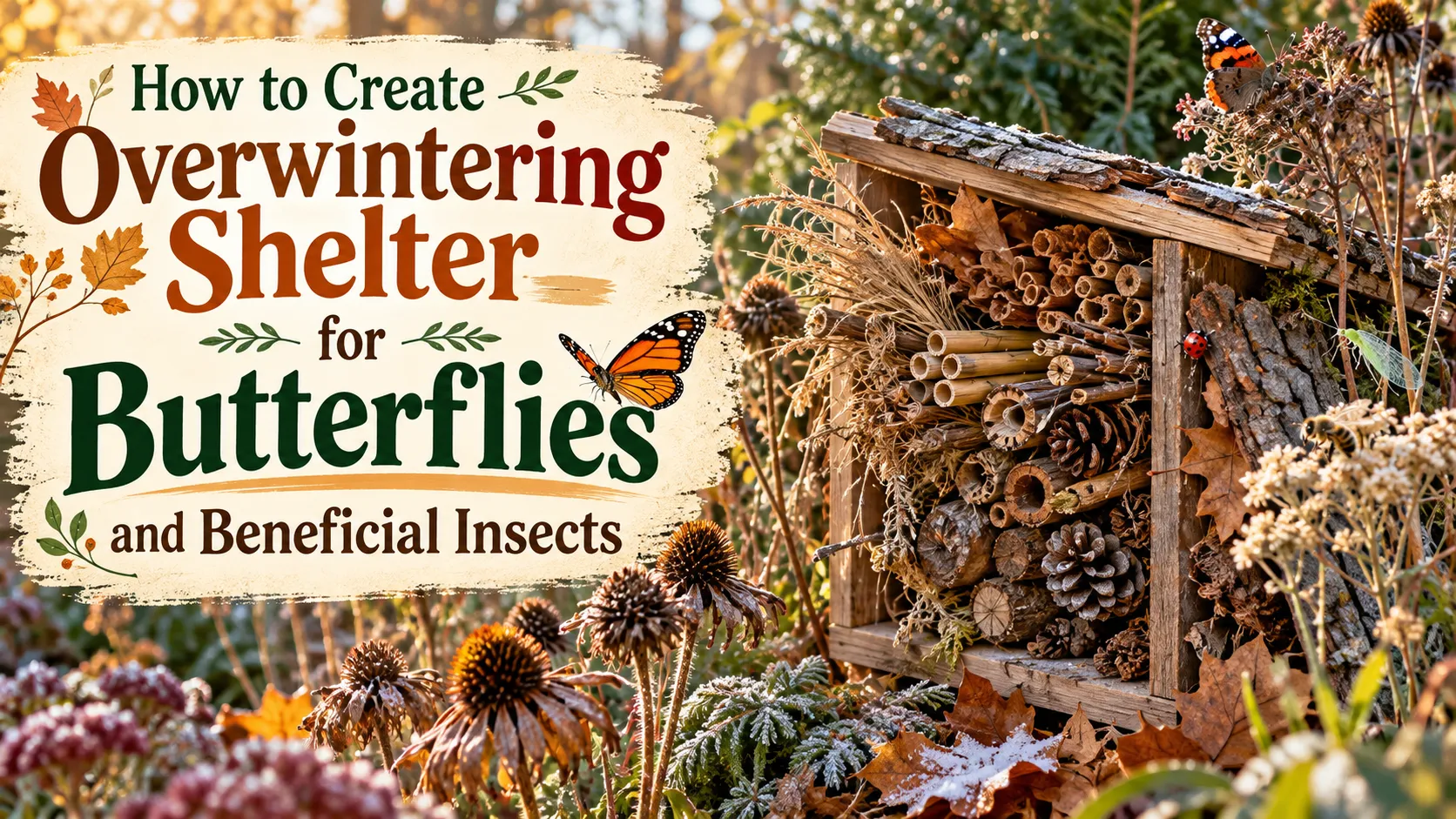
A patch of leaves beneath a shrub, dried flower stems or an old log may already provide the winter shelter insects need.
According to the Xerces Society, the vast majority of butterflies and moths do not migrate. Instead, they overwinter in the landscape at different life stages.
You don’t need to leave your entire yard untouched. Retain habitat where appropriate while maintaining areas that need attention for access, plant health, ticks or wildfire safety.
Where Do Butterflies and Beneficial Insects Go in Winter?
Butterflies overwinter as eggs, caterpillars, chrysalises or adults, depending on the species.
Examples from parts of the eastern and central United States include:
- Eggs: Some butterflies and moths spend winter as eggs attached to vegetation or other surfaces.
- Caterpillars: Great spangled fritillaries shelter near the ground, often around violets. Viceroy caterpillars can remain inside rolled leaf shelters on shrubs.
- Chrysalises: Black swallowtails overwinter as chrysalises that blend into dried vegetation.
- Adults: Mourning cloaks and eastern commas shelter in protected crevices, beneath bark or among woody debris.
These strategies vary by species and region.
University of Illinois Extension explains that black swallowtail chrysalises can resemble dried leaves, making them easy to overlook during cleanup.
Other beneficial insects use similar shelters. Bumble bee queens may overwinter in soil beneath leaf litter. Lady beetles and other predatory insects can shelter among leaves, bark and wood.
Migratory monarchs are an exception. The U.S. Fish and Wildlife Service reports that eastern migratory monarchs primarily overwinter in central Mexico, while western populations use coastal California and northern Baja California. Some populations remain year round in warmer regions.
For guidance beyond winter shelter, see our article on creating butterfly habitat.
Five Types of Natural Overwintering Shelter to Keep
Different insects use different parts of a garden. Retaining a variety of natural features provides potential habitat for more than one group.
| Shelter | Potential occupants | What to do |
|---|---|---|
| Fallen leaves | Butterfly and moth stages, bumble bee queens, ground beetles | Keep whole leaves beneath shrubs and in beds |
| Standing stems | Stem nesting bees and some butterfly life stages | Leave stems through winter |
| Brush and logs | Mourning cloaks, lady beetles and other insects | Retain a pile in a suitable location |
| Undisturbed soil | Ground nesting bees and soil dwelling insects | Avoid unnecessary digging and heavy covering |
| Rocks and crevices | Ground beetles and some bees | Preserve existing gaps |
| Shrubs | Viceroy and red spotted purple caterpillars | Avoid unnecessary fall pruning |
The Xerces Society’s nesting and overwintering guide describes these habitat features and their uses.
1. Fallen Leaves and Leaf Litter
Keep fallen leaves in planted areas where they won’t create maintenance or safety problems.
Leaves shelter insects within the litter and in the soil below. They also help moderate cold exposure.
Suitable locations include:
- Beneath shrubs.
- Around perennial plants.
- In flower beds.
- In quiet, low traffic garden corners.
Keep leaves whole. Shredding reduces their value as cover and can damage eggs, caterpillars or cocoons.
Heavy leaf accumulations can smother turfgrass, so rake excess leaves off the lawn and move them into suitable beds.
The Xerces Society recommends retaining whole leaves rather than shredding or discarding them.
2. Standing Plant Stems
Dried perennial stems can provide habitat long after their flowers disappear.
Some solitary bees, including small carpenter bees, nest in hollow or pithy stems. Other insects may overwinter attached to standing vegetation.
Leave perennial stems standing through fall and winter where practical.
If you cut them back in spring, Xerces recommends varied heights of approximately 8 to 24 inches to create potential nesting sites for stem nesting bees.
This is not a universal cutting height or a guarantee that the stems are unoccupied. The Xerces Society’s natural nesting habitat guidance explains why standing vegetation and retained stem stubble matter.
Instead of shredding cut tops, you can place them loosely in a sheltered location. Avoid disturbing stems showing signs of insect occupancy.
3. Brush Piles, Logs and Dead Wood
Woody debris provides crevices used by various insects. Adult mourning cloaks, for example, can shelter within brush piles or beneath loose bark.
If you have a suitable location, make a small brush pile using branches already in your garden.
- Choose an out of the way spot away from the house and frequently used areas.
- Place larger branches at the bottom.
- Add smaller branches and twigs loosely above them.
- Leave gaps between materials.
- Avoid dismantling the pile during winter.
The Xerces Society describes brush piles ranging from about 2 to 8 feet tall and 3 to 10 feet across. Smaller piles may suit gardens with limited space.
These are examples, not minimum dimensions or guarantees of insect use.
Don’t transport wood known to be affected by pests or disease. Check local restrictions before moving firewood or dead wood over long distances.
4. Bare Soil and Rock Crevices
Not every beneficial insect needs aboveground shelter.
The Xerces Society estimates that about 70 percent of native bee species nest underground. This describes nesting behavior, not a claim that all these bees overwinter as adults in soil.
Avoid unnecessary digging or tilling in established habitat areas. Leave some soil uncovered or lightly mulched.
Thick mulch, landscaping fabric and similar barriers can interfere with access to nesting soil.
Existing rock piles and stone crevices can also provide habitat for some insects.
You don’t need to uncover every bed or build a rock structure. Retaining some variation in the garden is enough for this approach.
5. Shrubs and Overwintering Caterpillars
Shrubs may hold overwintering caterpillars even after their foliage turns brown.
Illinois Extension describes viceroy and red spotted purple caterpillars sheltering in rolled leaves attached to woody plants.
Removing those branches can remove the insects, too.
Avoid unnecessary fall pruning where overwintering habitat may be present. Remove diseased, damaged or hazardous material when needed.
How to Prepare Your Garden for Overwintering Insects
A selective fall cleanup can preserve habitat while keeping the garden usable.
Step 1: Choose habitat areas.
Identify beds, shrub borders and quiet corners where leaves and dried vegetation can remain.
Step 2: Move excess lawn leaves.
Rake heavy accumulations off turf and into suitable planting areas. Keep the leaves whole.
Step 3: Leave perennial stems standing.
Retain dried stems through winter unless plant health or site conditions require removal.
Step 4: Keep some woody shelter.
Leave suitable logs or arrange a small, loose brush pile away from the house and regularly used areas.
Step 5: Limit soil disturbance.
Keep some soil undisturbed and avoid covering every patch with thick mulch.
Step 6: Maintain high use areas.
Keep paths and play spaces accessible. Follow local tick prevention and wildfire guidance where relevant.
Step 7: Delay spring cleanup.
Wait until local spring conditions are well established before removing remaining winter habitat. Leave suitable areas undisturbed longer when possible.
When You Should Remove Garden Debris Anyway
Not all garden debris should remain in place. Pest, disease and safety concerns can justify selective removal.
Vegetable Beds With Recurring Pests
Some crop pests overwinter in garden debris.
If squash bugs, cucumber beetles or other pests regularly affect your vegetable beds, removing infested crop residues may be appropriate.
This doesn’t require clearing unrelated flower beds or shrub borders.
Plants With Disease Problems
Some plant diseases persist in infected material left on the ground.
For example, removing infected fallen leaves beneath fruit trees may help manage diseases such as apple scab.
Follow recommendations for the specific disease, and don’t transfer infected material into a wildlife brush pile.
Areas With Tick Exposure
Ticks can occur in grassy, brushy and wooded areas, including residential gardens.
The CDC’s tick prevention guidance recommends reducing leaf litter and brush around homes and lawn edges as part of managing exposure to blacklegged ticks.
Where these ticks are a concern:
- Maintain paths and play spaces.
- Remove brush and leaf litter from high use areas where recommended.
- Separate recreational spaces from woodland edges where practical.
- Place retained habitat away from areas where people and pets frequently spend time.
These measures can reduce exposure risks but do not guarantee a tick free yard.
The NFPA and IBHS immediate zone fact sheet explains why the 0 to 5 foot zone matters and addresses broader mitigation.
Retain wildlife habitat only where it is compatible with these safety requirements.
Do Butterfly Houses or Insect Hotels Provide Winter Shelter?
Commercial butterfly houses are often advertised as winter shelters, but evidence for their usefulness is limited.
Penn State Extension explains that butterfly boxes are not thought to be useful. They assume butterflies will overwinter as adults inside an artificial enclosure, although relatively few species spend winter as adults.
There is little evidence that commercial butterfly houses provide meaningful overwintering habitat compared with natural vegetation, leaf litter and woody debris.
See our review of whether butterfly houses work for a closer look.
Bee hotels are different. Some solitary bees occupy artificial nesting cavities, but occupancy alone does not establish a conservation benefit.
A 2015 study in PLOS ONE examined nearly 600 bee hotels in Toronto over three years. Native wasps were common occupants, introduced bees used many structures, and native bees experienced greater parasitism than introduced bees.
The findings raise concerns about relying on bee hotels for conservation. They don’t establish that every bee hotel is harmful.
Retaining natural stems, logs and suitable soil habitat is a reasonable starting point without installing an artificial nesting structure.
When Is It Safe to Clean Up Overwintering Habitat in Spring?
The first warm day isn’t necessarily the right time to remove winter habitat.
Insects emerge at different times. Some bees become active in early spring, while others remain sheltered much longer.
There is no single cleanup date or temperature that guarantees all insects have emerged.
The Xerces Society’s spring cleanup guidance recommends using local seasonal conditions and delaying major cleanup.
Useful cues include:
- Nighttime temperatures becoming reliably milder.
- Lawns returning to active growth.
- Apple and pear trees finishing their bloom.
- Local conditions showing that spring is well established.
Temperatures in the 50s °F may be one cue, but 50°F is not a universal safe cleanup threshold.
For northern states, Xerces recommends waiting until at least mid to late April before considering substantial cleanup. Some insects remain inactive into May or later.
When you do tidy:
- Check stems and branches for attached chrysalises.
- Leave suitable stem stubble instead of cutting everything to ground level.
- Retain some leaf litter in garden beds.
- Avoid unnecessary disturbance of brush and log piles.
- Remove material sooner where disease, ticks, wildfire or other hazards require it.
Spring cut stems can provide nesting cavities for solitary bees during the growing season. Once occupied, those stems may need to remain through another winter for developing insects to complete their life cycle.
Where practical, leave some habitat undisturbed year round rather than clearing everything at once.
The Bottom Line
Overwintering shelter for butterflies and beneficial insects often comes from what’s already in your garden.
Keep whole leaves in suitable beds, leave perennial stems through winter, retain some woody debris and avoid unnecessary soil disturbance.
These features provide habitat for different insects and life stages. Preserve them where appropriate, address genuine hazards and give overwintering insects time to emerge before clearing their shelter.
Sources and further reading
- Leave the Leaves! (Xerces Society)
- Nesting and Overwintering Habitat (Xerces Society)
- For Pollinators' Sakes, Don't Spring into Garden Cleanup Too Soon! (Xerces Society)
- Moving Beyond Flowers: Natural Nesting Habitat for Bees and Other Insects (Xerces Society)
- Breaking the Fall Garden Cleanup Habit (Illinois Extension)
- Leaving Habitat for Beneficial Insects (University of Illinois IPM)
- Bewitching Butterflies and Moths with Fall and Winter Habitat (Maryland DNR)
- Pester the Pests or Leave the Leaves? (Nebraska Extension)
- Pollinator Myths (Penn State Extension)
- Preventing Tick Bites (CDC)
- Immediate (Noncombustible) Zone, NFPA and IBHS
- Bee Hotels as Tools for Native Pollinator Conservation: A Premature Verdict? (PLOS ONE)
- Monarch (Danaus plexippus), U.S. Fish and Wildlife Service