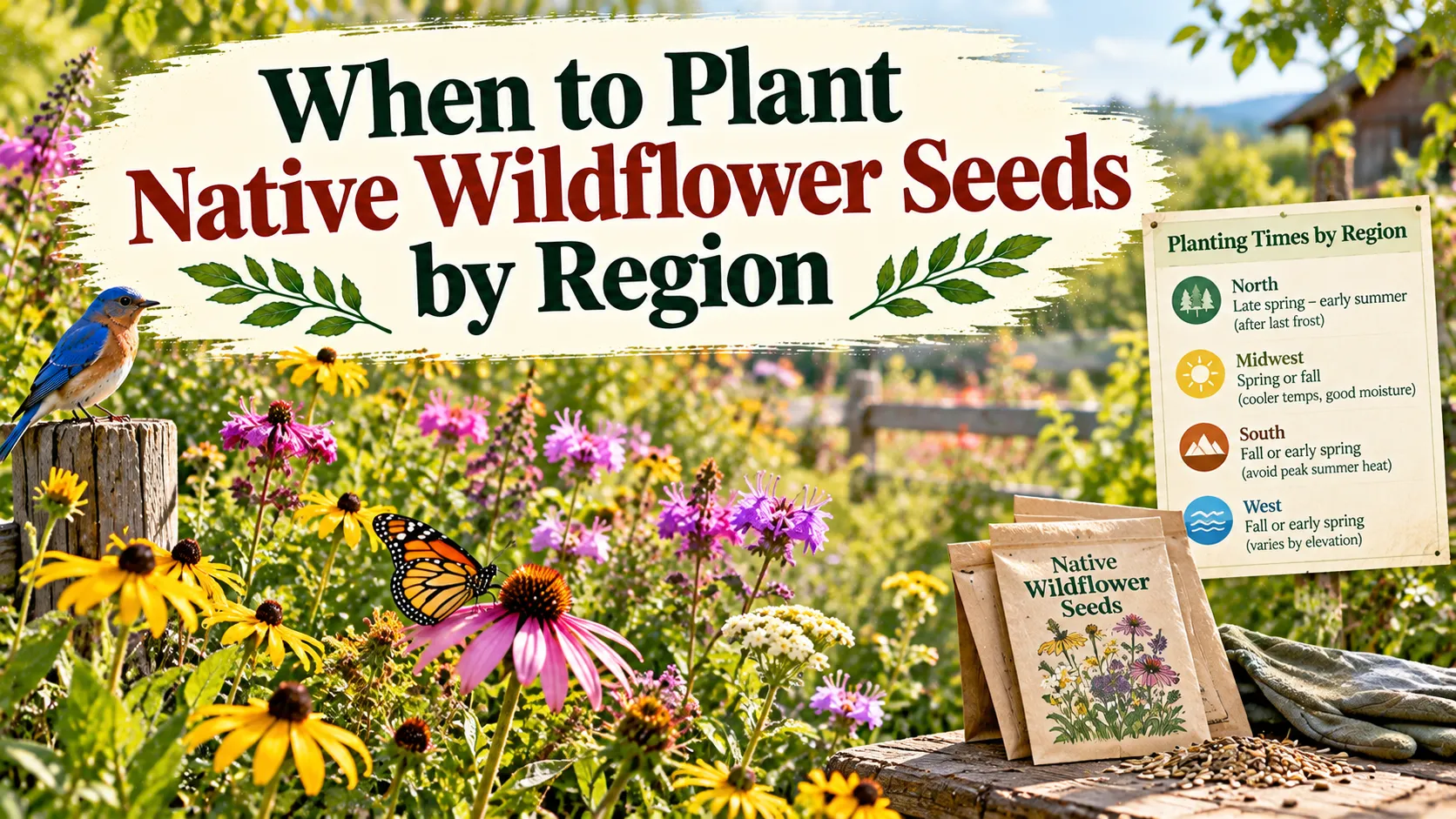
In most of the United States, fall is the best time to sow native wildflower seed. What “fall” means depends on your winters. Where winters are mild and rain arrives in fall, you sow in early to mid fall so seeds sprout with the rains. Where winters are cold, you wait until the soil is cold enough that seeds stay dormant until spring. Find your region in the table below, then follow its rule.
Two kinds of fall sowing
Most planting calendars just say “sow in fall.” The sources behind them describe two different strategies, and mixing them up is the most common way fall sowing fails.
Rain driven fall sowing (mild winters). In Texas, the state transportation department notes that most wildflower seeds, like bluebonnets, are planted in fall and then germinate and grow through the winter. In California, UC Master Gardeners explain that sowing from late October to late November mimics nature and takes advantage of the cool, rainy season. Here, seeds are meant to sprout in fall or winter.
Dormant seeding (cold winters). In the Upper Midwest, the aim is the opposite: seed goes down late enough that it won’t sprout before winter. Minnesota’s Board of Water and Soil Resources sets fall seeding after November 1 in the southern half of the state and October 15 in the northern half, so seed does not germinate before winter. Winter then does the stratifying (see below), and the seeds sprout as the soil warms in spring.
When to sow native wildflower seeds, by region
| Region | Strategy | When to sow |
|---|---|---|
| Texas | Rain driven fall | September to October; early November if the soil stays warm and moist. Earlier in North Texas |
| California | Rain driven fall | Late October to November, around the first rains; you can keep sowing into winter |
| Arizona low desert | Rain driven fall | October to mid December |
| Arizona higher elevations | Fall, cold and damp | Fall |
| Florida | Mild winter fall | North: mid September to mid October; Central: mid October to December; South: November to January |
| Southeast (Georgia, Carolinas) | Late fall and winter | As the soil cools in late fall and through winter |
| Midwest and Great Lakes | Dormant seeding | After about November 1, or once soil at 2 inches stays below 50°F; from about October 15 in northern Minnesota |
| Northeast | Dormant seeding | Mid October to December (central New York), or spring |
| Colorado and Mountain West | Late fall | Mid to late fall; in the mountains, just before the first significant snowfall |
| Pacific Northwest (west of the Cascades) | Fall, for spring sprouting | Early November, or mid April |
Dates are guides, not deadlines. Elevation, a warm or late fall, and how much rain falls all shift them. The sections below give the source for each region.
Texas
The Lady Bird Johnson Wildflower Center advises Texans to sow in fall: September and October are best, and early November can work if the soil stays warm and moist. The same answer notes that February is too late for spring flowers. Texas A&M’s horticulture specialists give the same window and add that the farther north you are in Texas, the earlier you should plant.
California
UC Davis Arboretum recommends sowing between October and November, just before the first rain. UC Master Gardeners in San Mateo and San Francisco suggest you can keep sowing every few weeks into winter to replace lost seed and stretch the bloom season. If rains are late or patchy, UC Master Gardeners in Butte County recommend watering during dry spells between rains.
Arizona
In the Sonoran Desert, the regional water conservation program Water Use It Wisely recommends October through mid December, so seeds are in place for fall and winter rains. At higher elevations, University of Arizona Extension in Yavapai County recommends fall planting because many wildflower seeds need cold, damp conditions before they germinate.
Florida
Florida’s sowing window moves later as you go south. The Florida Wildflower Foundation recommends mid September to mid October in North Florida, mid October through December in Central Florida, and November through January in South Florida. An older UF/IFAS Extension guide gives somewhat earlier dates: late August and September in north Florida, and September or October in south Florida. If you’re unsure, ask your county Extension office which calendar fits your area.
Southeast
UGA Extension notes that in Georgia, wildflowers are usually sown in late fall and winter as soil temperatures decline. Another UGA Extension agent points out that fall sowing lets winter do the stratifying for seeds that need cold, so they sprout naturally in spring. For the Carolinas and neighboring states, check the timing with your state Extension service.
Midwest and Great Lakes
Across the Midwest, agencies use late fall dormant seeding for native mixes:
- Iowa: the state Department of Natural Resources recommends dormant seeding after November 1.
- Michigan: USDA NRCS seeding tables for native conservation plantings call for dormant seeding after November 1, or when the soil at 2 inches is below 50°F.
- Minnesota: fall seeding after November 1 in the south and October 15 in the north.
- Illinois: the state Department of Natural Resources says native wildflower seed can be planted in either fall or spring.
Ohio
Ohio Department of Transportation research on native pollinator plantings recommends seeding native species in late fall. That work was done on roadsides, but the timing matches the Midwest rule above: sow once the soil has turned cold, usually from early November.
Missouri
Missouri Botanical Garden’s Shaw Nature Reserve explains that many Missouri wildflower seeds lose their dormancy by spending the winter cold and moist in the ground, and that sowing outdoors in fall or early winter achieves this. Follow the Midwest dormant seeding rule.
Northeast
A Cornell University program suggests scattering perennial wildflower seed between mid October and December in central New York, letting winter freezing and thawing break dormancy. UConn’s home garden center notes that meadows can be sown in spring or fall.
Colorado and the Mountain West
Colorado State University Extension calls mid to late fall a good time to sow wildflower seed. In the mountains, CSU Extension in Gilpin County suggests seeding in late fall, just before the first significant snowfall.
Pacific Northwest
For western Oregon, Oregon State University Extension recommends broadcasting seed in early November so germination begins in spring, or seeding in mid April. It notes that fall seeding does especially well because winter moisture is more reliable. East of the Cascades, OSU advises spring seeding later, often mid to late May, because of cool nights.
Can you sow native wildflower seeds in spring?
Yes, in many regions. Illinois, Oregon and Connecticut sources all list spring as an option. Two things change, though:
- Seeds that need cold may wait a year. A USDA plant materials center in New York found that most wildflowers native to the eastern US germinated better after at least a month of cold, moist stratification. Unstratified seed sown in spring may sit until the following spring.
- You may need to water. Fall sown seed uses winter rain and snowmelt. Spring sown seed may need watering until seedlings establish.
If you missed fall, you can stratify seed at home before spring sowing (next section).
Cold stratification, explained
Many native wildflower seeds carry a built in dormancy that stops them from sprouting at the wrong time. Cold stratification is a period of cold, moist conditions, like a winter in the soil, that breaks that dormancy.
- Fall sowing does it for you. Seeds sown outdoors in late fall or early winter are stratified naturally, as Missouri Botanical Garden explains.
- Not every seed needs it. UW Madison Extension in Dane County notes that some native seeds don’t need a cold, moist period at all, and the seed packet should say how long a period a species needs, usually 30 or 60 days.
- Some need more than one winter. The same source notes that a few species need alternating cold and warm periods and are best started outside in fall.
Mostly, stratification matters if you sow in spring. If you sow in fall at the right time for your region, winter handles it.
How to sow native wildflower seed
The sources broadly agree on a few steps:
- Clear the weeds first. UC Davis Arboretum suggests watering the area to sprout dormant weed seeds, removing them, and repeating as needed before sowing. OSU Extension gives the same advice and recommends loosening only the top 2 to 4 inches of soil to avoid bringing up deeper weed seed.
- Scatter evenly. Mixing small seed with sand makes even spreading easier, as several of the regional sources above suggest.
- Press, don’t bury. Texas A&M recommends pressing seeds in gently without fully burying them. The Florida Wildflower Foundation notes that many native wildflower seeds need light to germinate.
- Be patient. The USDA New York study found that plantings may not show the desired results in the first or second year. Illinois DNR notes that in the first year, native plants will most likely stay under six inches tall, because perennials put their early growth into roots.
Choosing a seed mix for your region
A packet labelled “wildflower” isn’t necessarily native to your area.
- UC Master Gardeners warn that some packages sold as wildflower mix contain seeds from all over North America, and recommend California native mixes for California gardens.
- UGA Extension advises looking for “Southeast native” or “Georgia native” on the label, because many mixes include non natives that can become invasive.
- UConn notes that many meadow mixes sold in the Northeast contain Midwestern and Western natives as well as exotic species.
- Colorado State University Extension points out that many plants in wildflower seed mixes are not native to Colorado.
Read the full species list before you buy. OSU Extension recommends choosing species native to your local region, both to attract native pollinators and to avoid introducing invasive species. University of Arizona Extension also advises against collecting wild seed; buy from a reputable local supplier instead. To plan the rest of the bed around your wildflowers, see our guides to choosing native plants, native perennials for a wildlife garden, seed bearing flowers and grasses, and flowers that feed adult butterflies.
Is it too late to plant native wildflower seeds in November?
In cold winter regions such as the Midwest and Northeast, November is often the right time for dormant seeding, once the soil is cold. In California and Central or South Florida, November is still within the main sowing window. In Texas, early November can work only if the soil stays warm and moist.
Should I sow native wildflower seeds on top of snow?
The sources in this guide time cold winter sowing for late fall, before or around the first lasting snow. If you sow later in winter, check the advice from your state Extension service for your area and seed mix.
Do I need to cold stratify seeds if I sow in fall?
Usually not. Sowing outdoors in late fall or early winter lets the seeds go through a natural cold, moist period in the soil. Stratifying at home is mainly useful if you plan to sow in spring.
Why did my native wildflowers not come up the first year?
Many native perennials put their first year growth into roots, and some seeds need a winter before they sprout. A USDA plant materials study found that plantings may not show the desired results in the first or second year.
Can I use a national wildflower mix?
It is better to choose a mix made for your region and to check the full species list. Several Extension services warn that wildflower mixes often contain plants that are not native to the area where they are sold.
Sources and further reading
- Planting wildflower seeds in Texas in February — Lady Bird Johnson Wildflower Center
- When To Plant Wildflower Seeds For Stunning Spring Blooms — Texas A&M AgriLife
- Blooming bluebonnets: How TxDOT keeps roadside flowers flourishing — Texas Department of Transportation
- Sowing Native California Wildflower Seeds — UC Master Gardeners of San Mateo & San Francisco Counties
- Native wildflower seeds — UC Davis Arboretum and Public Garden
- Growing Annual Native Wildflowers — UC Master Gardeners of Butte County
- Secrets to Successful Wildflowers in the Arizona Desert — Water Use It Wisely
- Planting Next Year's Wildflowers — University of Arizona Cooperative Extension, Yavapai County
- Florida wildflowers — Florida Wildflower Foundation
- Establishing a Small Planting of Native Wildflowers from Seed — UF/IFAS Extension
- Enjoy the beauty of wildflowers in your landscape by sowing your seeds now — UGA Extension, Dougherty County
- Fall pollinator garden tips — UGA Extension, Newton County
- Prairie Seeding — Iowa Department of Natural Resources
- Conservation Cover Common Seeding Tables (Michigan) — USDA NRCS
- Minnesota Wetland Restoration Guide: Wetland Seeding — Minnesota Board of Water and Soil Resources
- Native pollinator seed mix research summary — Ohio Department of Transportation
- Native Seed Propagation Methods — Missouri Botanical Garden, Shaw Nature Reserve
- Pollinator Wildflower Seed Mix Planting Instructions — Illinois Department of Natural Resources
- Fall is for planting perennial wildflower seeds — Cornell University, Biocontrol Bytes
- Wildflower Meadows — UConn Home & Garden Education Center
- Wildflowers in Colorado (fact sheet 7.233) — Colorado State University Extension
- Seed and Tree Sales — Colorado State University Extension, Gilpin County
- Annual wildflowers bring color and pollinators back every year — Oregon State University Extension
- Growing wildflowers in Central Oregon — Oregon State University Extension
- Germination Studies for Various Wildflowers — USDA NRCS Big Flats Plant Materials Center
- Winter Sowing Native Wildflower Seed — UW–Madison Extension Dane County