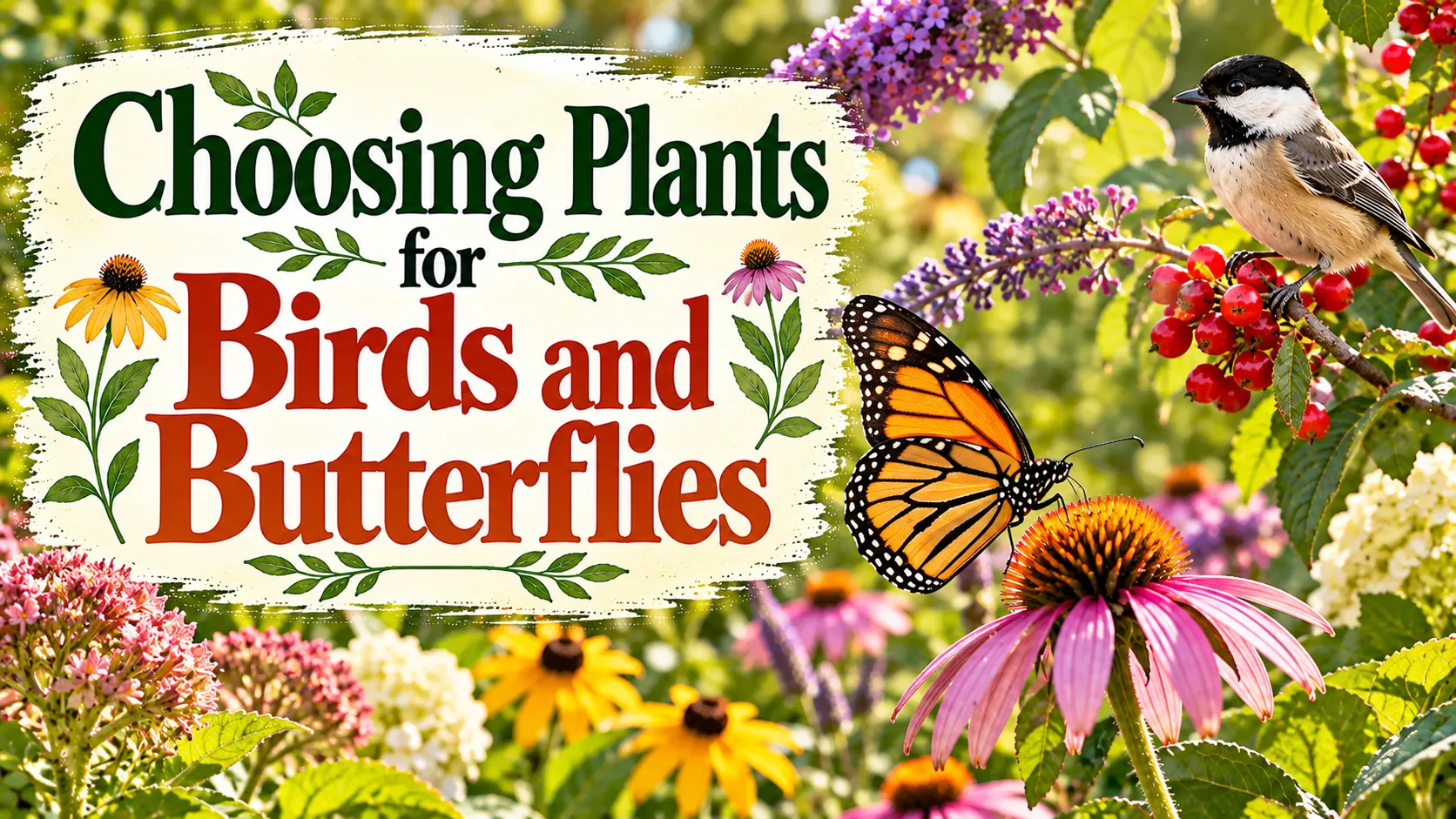
Choosing plants for birds and butterflies starts with your region, your garden conditions, and the resources local wildlife needs. Combine plants that provide nectar for adult butterflies, host plants for caterpillars, seeds and insects for birds, fruit, and shelter.
Plant suitability varies by location. A species that supports wildlife in one region may struggle elsewhere or become invasive outside its natural range. Rather than relying on a universal list of “best” plants, choose species that suit your site and offer complementary benefits.
1. Start With Your Region and Growing Conditions
First, identify which plants can thrive in your garden and which local birds and butterflies you want to support.
Identify your local native plants
Native plants occur naturally in a particular region. They can provide valuable food and habitat for wildlife associated with those plant communities.
However, “native” does not mean suitable everywhere. A plant native to one part of the United States may not be native to another, and some species have limited natural ranges.
Use the USDA PLANTS Database to check plant identity and distribution. The Audubon Bird Friendly Plants FAQ offers further guidance on native plant selection.
For more specific advice, consult a regional native plant organization or your local Cooperative Extension service. Check a plant’s natural range rather than relying on a nursery label that simply says “native.”
Match plants to your garden
A plant’s wildlife benefits matter only if it can grow well in your conditions.
Consider:
- Sunlight: Is the area in full sun, partial shade, or deep shade?
- Soil: Is it sandy, clay rich, rocky, or loamy?
- Moisture: Is the ground dry, consistently moist, or occasionally waterlogged?
- Climate: Can the plant tolerate your winter temperatures and summer conditions?
- Space: Will the mature plant fit without crowding paths, structures, or neighboring plants?
- Maintenance: Can you manage its growth habit and ongoing care?
The USDA Plant Hardiness Zone Map helps assess winter temperature suitability. Its zones are based on average annual extreme minimum winter temperatures, so they do not account for every factor affecting plant growth. Soil, drainage, summer heat, exposure, and local microclimates also matter.
Practical tip: Shortlist plants that suit your site before comparing their wildlife benefits. This helps you avoid choosing species that are unlikely to thrive.
2. Choose Plants for the Resources They Provide
Different plants support wildlife in different ways. Aim for a mix of resources rather than relying on flowers alone.
Nectar for adult butterflies
Many adult butterflies feed on flower nectar. Choose flowering plants suited to your region that provide accessible nectar and bloom at different times.
Staggered flowering periods can offer visiting butterflies more consistent opportunities to feed than a garden that flowers heavily for only a short time.
When evaluating a plant, ask:
- Will it grow well in my conditions?
- Is it suitable for local pollinators?
- When does it flower?
- Will it complement the other plants in my garden?
Flower color and appearance can influence your design, but they should not be your only selection criteria. For a season by season nectar plant list, see our guide to nectar rich flowers for butterflies.
Host plants for caterpillars
If you want to support butterflies through their life cycles, include suitable caterpillar host plants as well as nectar producing flowers.
Many caterpillars depend on particular host plants. Adult butterflies may visit a range of flowers for nectar but lay eggs only on plants suitable for their offspring.
A garden full of nectar producing flowers may attract adult butterflies without providing the food their caterpillars need.
Research host plants used by butterfly species in your area. The North American Butterfly Association’s butterfly garden resources can help you identify regionally appropriate options. To see how host plants fit the rest of the butterfly life cycle, see our guide to butterfly habitat.
Not every flowering plant supports caterpillars, and a host plant for one butterfly species may not serve another. For how these two plant roles differ, see our guide to caterpillar host plants vs adult nectar plants.
Seeds and insects for birds
Many birds eat seeds, while others rely heavily on insects or a combination of foods. Some species also feed insects to their young.
Seed bearing flowers and grasses can complement plants chosen for butterflies. Where appropriate for your region and site, leave some seed heads in place through their natural cycle instead of removing every spent flower immediately.
Consider which birds occur locally and what they eat. Do not assume all backyard birds have the same dietary needs.
Berries and other fruits
Fruiting shrubs and trees can provide birds with food at different times of year. Their value depends on the plant species, fruiting season, local wildlife, and growing conditions.
Before choosing a fruiting plant, check:
- Whether it is suitable for your region.
- When its fruit typically ripens.
- Whether its mature size fits your garden.
- Whether it also provides cover or nesting structure.
- Whether it is considered invasive or restricted where you live.
Attractive berries are not enough to make a plant a good choice. Confirm that the species is appropriate for your local environment. For specific native shrubs and their seasonal fruit roles, see our guide to berry producing shrubs for backyard birds.
Shelter and nesting structure
Wildlife gardens need shelter as well as food. Trees, shrubs, grasses, and other suitable vegetation can provide cover and places for animals to rest, nest, or seek protection.
Different growth forms serve different purposes. A mix of plant heights and structures can offer more varied habitat than a uniformly short planting.
Choose plants with your available space and local wildlife in mind. Account for the mature size of trees and shrubs before deciding where to plant them. For the feeders and nest boxes that build on this plant base, see our guide to feeding and nesting structures for backyard birds.
3. Combine Different Plant Types
Instead of expecting one plant to benefit every kind of wildlife, build a complementary mix.
| Plant type | Potential contribution | What to check |
|---|---|---|
| Flowering perennials | Nectar and, for some species, seeds | Local suitability, bloom period, wildlife use |
| Seed bearing flowers and grasses | Seeds and vegetation structure | Suitability for local birds and growing conditions |
| Shrubs | Fruit, insects, and cover | Mature size, regional status, fruiting season |
| Trees | Habitat structure, insects, and sometimes fruit or seeds | Available space, site conditions, mature size |
| Butterfly host plants | Food for particular caterpillars | Which butterfly species use the plant |
| Ground level vegetation | Cover and habitat structure | Site conditions and local wildlife needs |
These categories overlap. One plant may provide several resources, while another may serve a more specific purpose. Choose a mix whose benefits fit your location.
Think in layers
Where space permits, combine vegetation at different heights. Trees can form an upper layer, shrubs a middle layer, and perennials or grasses a lower layer.
This creates varied structure without expecting every plant to do everything.
In a small garden, apply the same principle on a smaller scale. A few carefully chosen plants with different functions may be more useful than a large collection selected only for appearance.
4. Plan for Seasonal Continuity
Wildlife needs change through the year. A garden that flowers for only a few weeks may offer fewer resources at other times.
Consider the whole growing season and, where relevant, the colder months.
Stagger flowering periods
Choose suitable plants with overlapping or staggered bloom times to make nectar available over a longer period.
Flowering dates vary with species, weather, and local conditions. Use regional guidance rather than assuming a plant will follow the same calendar everywhere.
Consider seeds, fruit, and insects
Flowers are only part of the food supply. Seed heads, fruit, and insects associated with suitable vegetation can provide different resources at different times.
Check when plants typically produce seeds or fruit. Where appropriate for the species and your garden, leave some seed heads in place after flowering.
Do not assume one plant will feed wildlife all year. A combination of species with complementary resource periods is a more practical approach.
Keep habitat available beyond flowering
Plants can provide shelter and structure even when they are not in bloom. Consider how trees, shrubs, grasses, and other vegetation contribute outside peak flowering periods.
Leave suitable vegetation standing when it is safe and practical. Balance habitat benefits with plant health, access, and local pest or disease concerns. For perennials that supply standing structure and seed through winter, see our guide to native perennials for year round wildlife gardening.
5. Check Native Status, Cultivars, and Invasive Potential
Before planting, confirm what a plant is and whether it is appropriate for your region.
Look beyond the word “native”
A plant described as native may occur naturally in a broad area without being native to your particular region. Check its distribution using a reliable database and local guidance.
The USDA PLANTS Database is a starting point for checking plant identity and distribution. Regional native plant organizations and Cooperative Extension services can help interpret that information.
Understand cultivars
Cultivars are cultivated plant varieties selected for particular traits, which may affect appearance, growth, flowers, or other characteristics.
Do not assume that every cultivar offers the same ecological benefits as its straight species. It is also too broad to claim that all cultivars are harmful to wildlife. Effects depend on the plant and the trait involved.
The Illinois Extension guide to native plants and cultivars explains why these differences matter. If wildlife value is a priority, look for evidence about the specific cultivar and benefit you care about.
Check invasive species guidance
A plant that provides food or cover in one location may cause problems if it spreads beyond cultivation.
Before planting, check current guidance for your state or region. The National Invasive Species Information Center’s species lists can help you begin.
These lists may not cover every species of concern, and rules can change or vary by location. Consult the relevant local or state authority if you are unsure whether a plant is appropriate or restricted where you live.
6. Garden With Wildlife Safety in Mind
Plant selection is only part of a wildlife friendly garden. Maintenance choices matter, too.
Be cautious with pesticides
Pesticides can harm pollinators and other wildlife depending on the product and how it is used. Avoid unnecessary routine treatments, and consider whether a problem can be managed without chemicals.
If a pesticide is necessary, identify the pest accurately, read and follow the product label, and take the required precautions to limit exposure to pollinators and other nontarget organisms.
The U.S. Environmental Protection Agency’s tools and strategies for pollinator protection provides further guidance.
Avoid unnecessary cleanup
Clearing the garden immediately after flowering can remove seed heads and vegetation that wildlife may use. Where practical, leave suitable plant material in place through its natural cycle.
Adapt maintenance to your site. Remove material when needed for plant health, safety, access, or local management, but do not assume that a completely cleared garden is always best for wildlife.
7. A Practical Checklist for Choosing Plants
Use this checklist when comparing plants or planning a wildlife friendly bed.
- Confirm regional suitability. Check the plant’s identity and whether it is native or otherwise appropriate for your location.
- Match the site. Consider sunlight, soil, moisture, climate, mature size, and maintenance.
- Identify the wildlife benefit. Decide whether the plant provides nectar, caterpillar food, seeds, fruit, insects, shelter, or several resources.
- Check which species use it. For host plants, verify which local butterfly species depend on the plant.
- Plan across the seasons. Combine plants with complementary flowering, fruiting, and seed producing periods.
- Review cultivar information. Investigate whether a cultivar’s selected traits affect the wildlife benefit you want.
- Check invasive status. Consult current regional guidance before planting.
- Plan maintenance. Manage spent flowers, seed heads, pests, and plant material without unnecessarily reducing habitat value.
You do not need to meet every wildlife need at once. Start with the most important missing resource and add suitable plants over time.
Frequently Asked Questions
Are native plants always the best choice for birds and butterflies?
Regionally native plants can be valuable because local wildlife has developed alongside the plants in its environment. The best choices also depend on site conditions, the wildlife you want to support, and whether a species is appropriate for your location. Verify native distribution and growing requirements rather than relying on a general label.
Do flowers for butterflies also feed caterpillars?
Not necessarily. Adult butterflies often visit flowers for nectar, while caterpillars may need particular host plants. A garden designed to support the butterfly life cycle should account for both needs.
Should I choose straight species or cultivars?
If ecological value is your priority, compare the cultivar with the straight species and look for evidence about the relevant wildlife benefit. Do not assume every cultivar is equivalent, but do not assume all cultivars are harmful either.
How can I provide food for birds throughout the year?
Combine appropriate plants that offer seeds, fruit, insects, and shelter at different times. Confirm the timing and suitability of individual plants for your region rather than assuming any one plant will provide food year round.
Can a small garden help birds and butterflies?
Yes. A small garden can provide useful resources when its plants suit the space and local conditions. Focus on a few complementary benefits rather than trying to include every possible plant type.
Build a Garden Around What Wildlife Needs
Choose plants for your region, your garden conditions, and the resources local wildlife needs.
Combine nectar plants with caterpillar host plants, seed bearing vegetation, fruiting plants, and suitable shelter. Check plant identity, native distribution, growing requirements, and invasive status before planting. Then look for ways to provide useful resources across the seasons.
A wildlife friendly garden does not depend on one perfect plant. It grows from a thoughtful mix of suitable plants that work together to support local birds and butterflies.
Sources and further reading
- Grow These Native Plants So Your Backyard Birds Can Feast (Audubon)
- Bird Friendly Plants FAQ (Audubon)
- Butterfly Garden Plants (North American Butterfly Association)
- Regional Butterfly Garden Guides (North American Butterfly Association)
- How to Use the Maps (USDA Plant Hardiness Zone Map)
- USDA PLANTS Database
- Natives and Landscape Plant Selection (Illinois Extension)
- Native vs. Nativar (Illinois Extension)
- Species Lists (National Invasive Species Information Center)
- Tools and Strategies for Pollinator Protection (U.S. Environmental Protection Agency)