
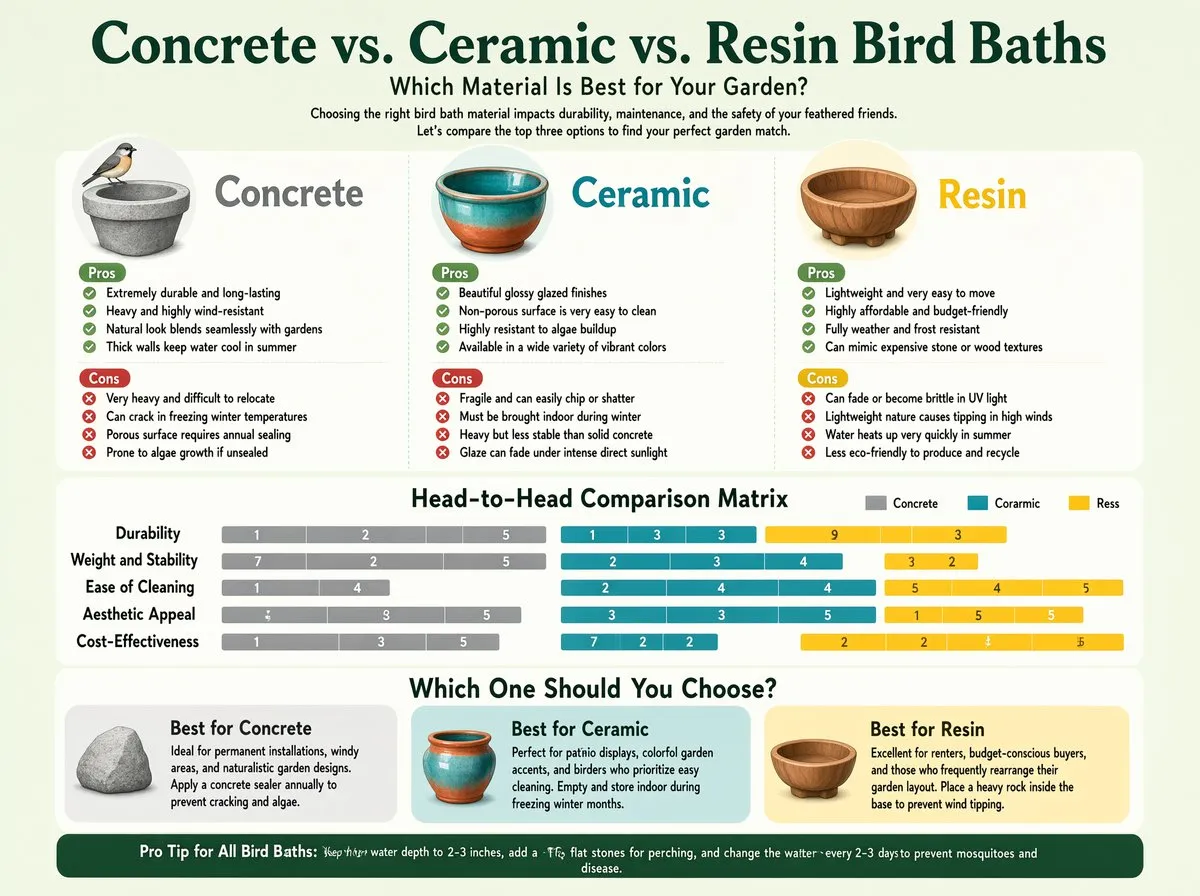
Selecting the right water feature for your backyard is about more than just aesthetics. The material of your birdbath dictates how long it will survive the elements, how easy it is to clean, and whether it provides a safe, accessible environment for local wildlife. When conducting a bird bath materials comparison, you must weigh factors like freeze-thaw tolerance, weight, porosity, and avian safety.
Whether you are looking to attract vibrant songbirds or delicate pollinators, understanding the physical properties of concrete, ceramic, and resin will help you make an informed investment. For the broader water setup, from cleaning to winter care, explore our guide to bird baths and water features for wildlife.
Below is a practical, side-by-side evaluation to help you determine the best bird bath material for your specific climate, garden layout, and maintenance tolerance.
1. Bird Bath Materials at a Glance: Quick Comparison Chart
Before diving into the specifics of each material, here is a scannable summary comparing the three most common birdbath materials across critical performance metrics.
| Feature | Cast Concrete | Glazed Ceramic | Resin / Polyresin |
|---|---|---|---|
| Weight | Very Heavy | Heavy | Lightweight |
| Durability | High (Impact resistant, but cracks) | Medium (Chips and shatters) | High (Dents, but won’t shatter) |
| Maintenance | High (Porous, harbors algae) | Low (Slick surface) | Low (Non-porous) |
| Frost Tolerance | Poor (Prone to spalling/cracking) | Poor (Shatters in freezing temps) | Excellent (Flexible in cold) |
| Avian Grip | Excellent (Naturally textured) | Poor (Slippery when wet) | Variable (Depends on mold design) |
| Price Point | Mid to High | Mid to High | Budget to Mid |
2. Concrete Bird Baths: Unmatched Stability vs. Heavy Maintenance
Cast concrete has been the traditional standard for garden statuary and water features for decades. It offers a classic, naturalistic look that blends seamlessly into lush garden beds and provides exceptional stability.
The Pros: Wind Resistance and Texture
The primary advantage of concrete is its sheer mass. A large concrete birdbath can weigh over 50 pounds empty, meaning it will not tip over in high winds or be easily knocked over by ground predators like raccoons. Furthermore, the naturally rough, porous texture of cured concrete provides excellent footing for birds. According to guidelines from the Cornell Lab of Ornithology, birds require secure, textured grip to feel safe while bathing, making concrete an inherently bird-friendly choice.
The Cons: Porosity and Freeze-Cracking
The downside to that heavy, porous surface is maintenance. Microscopic pits and fissures in the concrete provide perfect hiding spots for algae spores and avian biofilm. Scrubbing a concrete basin requires a stiff-bristled brush and significant elbow grease to dislodge bacteria from the pores.
More critically, concrete is highly vulnerable to winter weather. Because it is porous, it absorbs rainwater and bathwater into its core. When temperatures drop, that trapped water freezes and expands, creating immense internal pressure. Over time, this freeze-thaw cycle causes the concrete to spall (flake), develop deep structural cracks, and eventually split in half.
3. Ceramic & Glazed Bird Baths: Visual Appeal vs. Brittleness
Ceramic birdbaths, particularly those finished with a vibrant, high-gloss glaze, are prized for their artistic beauty. They serve as striking focal points in garden design, offering colors and patterns that concrete and resin simply cannot match.
The Pros: Algae Resistance and Aesthetics
The glass-like finish of a glazed ceramic bird bath is entirely non-porous. This slick surface makes it incredibly difficult for algae and biofilm to take root. A quick wipe with a sponge is often enough to clean the basin, making routine sanitation fast and effortless. The vibrant colors can also attract birds, as many species are drawn to bright visual cues in the landscape.
The Cons: Impact Fragility and Winter Vulnerability
Ceramic is essentially baked clay, making it inherently brittle. A dropped branch, a stray kick from a lawnmower, or a heavy hailstorm can easily chip the glaze or shatter the basin entirely. Once the glaze is compromised, water enters the porous clay beneath, accelerating degradation.
Glazed ceramic bird bath winter care is essentially a mandate to bring the item indoors. Like concrete, the underlying clay absorbs moisture. However, ceramic lacks the structural flexibility to handle the expansion of freezing water. Leaving a ceramic birdbath outside during a hard freeze will almost certainly result in a shattered basin by spring. If you live in a climate with freezing winters, ceramic is strictly a seasonal, warm-weather accessory that must be drained, dried, and stored in a garage or shed from late autumn to early spring.
4. Resin & Polyresin Bird Baths: Budget-Friendly Portability with Modern Durability
Resin and polyresin (a blend of resin and powdered stone) represent the modern standard for durable weatherproof bird baths. Manufactured by injecting high-density plastics or polymers into detailed molds, these baths offer a compelling alternative to traditional stone and clay.
The Pros: Freeze-Resistance and Portability
The greatest advantage of resin is its flexibility. Unlike rigid concrete or ceramic, resin can expand and contract with temperature fluctuations without cracking. This makes it incredibly resilient in harsh weather. Furthermore, resin is non-porous, meaning it resists algae growth nearly as well as glazed ceramic but without the risk of shattering if dropped.
Resin baths are also lightweight, making them easy to move around the yard to chase the shade in the summer or reposition for optimal birdwatching views from your window. They are generally the most budget-friendly option, allowing gardeners to purchase multiple units for different zones of their property.
The Cons: Tipping Risks and UV Degradation
The lightweight nature of resin is a double-edged sword. In regions prone to high winds or severe thunderstorms, an empty or lightly filled resin birdbath can easily blow over. Additionally, while modern resins are treated with UV inhibitors, prolonged exposure to direct, blazing sunlight over several years can cause cheaper plastics to fade, chalk, or become brittle.
Commercial Tip: When shopping for resin, look for models with a wide, weighted base, or plan to modify the base yourself (see the FAQ section below for weighting techniques).
5. Cleaning & Maintenance: Preventing Algae and Biofilm by Material Type
The National Wildlife Federation emphasizes that clean water is critical for preventing the spread of avian diseases like Salmonellosis and Avian Canker. However, your cleaning protocol must be adapted to the material of your birdbath to avoid damaging it. For a full schedule and the safe vinegar ratio, see our guide to keeping bird bath water clean.
Cleaning Concrete
Because of its rough texture, concrete requires mechanical agitation. Use a stiff nylon-bristle brush and a solution of one part white distilled vinegar to nine parts water. Scrub vigorously to lift biofilm from the pores. Avoid using harsh chemical algaecides or bleach, as the porous concrete will absorb these toxins and slowly leach them back into the fresh water, potentially harming visiting wildlife.
- Sealing: To reduce maintenance, you can apply a non-toxic, wildlife-safe concrete sealer once a year. This fills the microscopic pores, creating a slicker surface that mimics the easy-clean properties of ceramic. (Note: Always verify that any sealant used is fully cured and certified safe for potable water or wildlife before refilling the bath.)
Cleaning Glazed Ceramic
The slick surface of ceramic requires a gentler approach. Avoid wire brushes or highly abrasive scouring pads, which can leave micro-scratches in the glaze. These scratches will eventually harbor algae and ruin the aesthetic finish. Use a soft sponge or a soft-bristled brush with the same 1:9 vinegar solution. For hard water mineral stains, let the vinegar solution sit on the stain for 15 minutes before wiping it away.
Cleaning Resin
Resin is the easiest to clean. A simple wipe-down with a sponge and the vinegar solution is usually sufficient. Like ceramic, avoid wire brushes, as they will permanently scar the plastic surface. If your resin bath has developed a chalky, oxidized surface from UV exposure, a gentle scrub with a baking soda paste can help restore the surface before rinsing.
6. Winter Weather & Freeze Tolerance: What Can Stay Outdoors?
When conducting a bird bath freeze resistance comparison, the winner is clear. Winter weather is the ultimate test of outdoor garden decor, and the physics of freezing water are unforgiving. The routine matters as much as the material, so see our guide to winter bird bath care for heaters and freeze protection.
The Danger of Thermal Shock
Thermal shock occurs when a material experiences a rapid, extreme change in temperature. If you attempt to thaw a frozen ceramic or concrete birdbath by pouring boiling water over it, the sudden expansion of the heated surface against the freezing core will cause the material to instantly shatter or crack.
Which Materials Can Stay Outside?
- Resin: High-quality resin and polyresin birdbaths can safely remain outdoors year-round. The material is flexible enough to accommodate the expansion of freezing water without rupturing. You can safely pair a resin bath with a cast-aluminum, thermostatically controlled bird bath de-icer to keep a section of the water open for winter hydration.
- Concrete and Ceramic: These must be protected. If you cannot move them into a shed or garage, you must at least drain them completely, scrub them dry, and cover them with a heavy-duty, waterproof tarp or a custom-fitted birdbath cover to prevent snow and rain from accumulating inside the basin.
7. Bird & Butterfly Safety: Surface Grip, Depth, and Water Temperature
The best bird bath material is one that prioritizes the physical safety and comfort of the wildlife using it. Material choice directly impacts footing, water temperature, and accessibility for different species.
Surface Grip and Footing
Birds are highly vulnerable when bathing. They need to feel secure to focus on cleaning their feathers rather than watching for predators.
- Concrete offers the best natural grip. Its rough, sandpaper-like texture allows tiny claws to lock in securely, even on sloping sides.
- Ceramic is notoriously slippery when wet. If you choose a glazed ceramic bath, it is highly recommended to add textured landing stones or a piece of untreated, rough bark to the center and edges to provide safe exit routes and secure perches.
- Resin varies by manufacturer. Look for resin molds that specifically feature textured rims and sloping, ribbed interiors designed to mimic natural stone.
Heat Retention in Summer Sun
Water temperature matters. Birds prefer cool water for bathing, as it helps them regulate their body temperature during hot summer months.
- Concrete has high thermal mass. It absorbs the coolness of the earth and the water, keeping the bath refreshingly cool even in direct afternoon sun.
- Dark-colored Resin can absorb significant heat. A black or dark green resin birdbath sitting in full, unshaded summer sun can become uncomfortably warm, potentially deterring birds from bathing. If using dark resin, place it in a shaded area or add a solar fountain insert to keep the water circulating and cool.
Safe Perching for Butterflies and Pollinators
Butterflies do not bathe; they drink. They require shallow water and dry landing zones to extend their proboscis without drowning. Regardless of the material you choose, a standard 2-inch deep birdbath is dangerous for pollinators. To create a safe butterfly puddling station, place large, flat river stones inside the basin so their tops sit just above the water line. This provides the dry footing butterflies need while allowing them to access the moisture below.
8. The Final Verdict: Which Bird Bath Material Belongs in Your Backyard?
There is no single “perfect” material; the right choice depends entirely on your regional climate, garden layout, and willingness to perform maintenance.
- Choose Concrete if: You live in a mild, frost-free climate, you experience high winds, and you do not mind a rigorous scrubbing routine. It is the most stable and natural-looking option, providing excellent grip for songbirds.
- Choose Glazed Ceramic if: You view the birdbath primarily as a piece of garden art, you want the easiest possible cleaning routine, and you have the storage space to bring the bath indoors during the winter months.
- Choose Resin if: You live in a region with harsh, freezing winters and want a durable weatherproof bird bath that can stay outside year-round with a de-icer. It is also the best choice for gardeners who frequently rearrange their landscape or want a budget-friendly, low-maintenance option.
By matching the material to your specific environmental conditions and maintenance tolerance, you ensure a safe, inviting, and long-lasting water source for your local birds and butterflies.
Frequently Asked Questions
Can ceramic bird baths stay outside during winter?
No. Glazed ceramic bird baths should not stay outside during freezing winter weather. The underlying clay is porous and absorbs water. When that water freezes and expands, it will cause the ceramic to crack or shatter completely. Furthermore, the glaze can chip and peel due to frost heave. Proper glazed ceramic bird bath winter care requires draining the basin, drying it thoroughly, and storing it in a garage, shed, or covered porch until spring.
Are resin bird baths safe and non-toxic for birds and pollinators?
Yes, a resin bird bath safe for birds is the industry standard for modern wildlife gardens. High-density polyresin and molded plastics used in reputable birdbaths are inert, non-toxic, and do not leach harmful chemicals into the water once cured. They are entirely safe for songbirds, butterflies, bees, and even pets that might stop by for a drink.
How do you seal or clean a porous concrete bird bath safely?
To clean concrete, use a stiff nylon brush and a solution of one part white vinegar to nine parts water. Avoid bleach or synthetic algaecides, as the porous concrete will absorb these chemicals and leach them into future water refills. To reduce the porosity and make future cleaning easier, you can apply a wildlife-safe, water-based concrete sealer. Ensure the sealer is explicitly labeled as non-toxic and safe for potable water or aquatic life, and allow it to cure completely (often up to 72 hours) before refilling the bath.
Which bird bath material stays coolest in hot summer weather?
Cast concrete stays the coolest in hot summer weather. Because of its high thermal mass and natural insulating properties, concrete resists rapid temperature changes, keeping the water inside refreshingly cool even when exposed to direct sunlight. Conversely, dark-colored resin or plastic birdbaths can absorb solar radiation and heat up significantly, making the water uncomfortably warm for bathing birds.
How do you weigh down a lightweight resin bird bath against wind?
Because resin is lightweight, it can easily tip over in high winds. To weigh it down, you can fill the hollow base or pedestal of the birdbath with dry play sand, gravel, or heavy paving stones before assembling the top bowl. If the base is sealed and cannot be filled, you can secure the birdbath by placing it on a heavy, wide paving stone, or by using landscaping stakes driven through the base flanges directly into the soil.
Sources
- Audubon Society: How to Choose and Maintain a Birdbath - Guidelines on selecting safe depths, textures, and maintenance routines for avian health.
- Cornell Lab of Ornithology (All About Birds): Attracting Birds With Water - Research on bird behavior, the necessity of secure footing, and the importance of moving water.
- National Wildlife Federation: Providing Water for Wildlife - Best practices for creating safe, disease-free hydration stations for birds and beneficial pollinators in backyard habitats.