
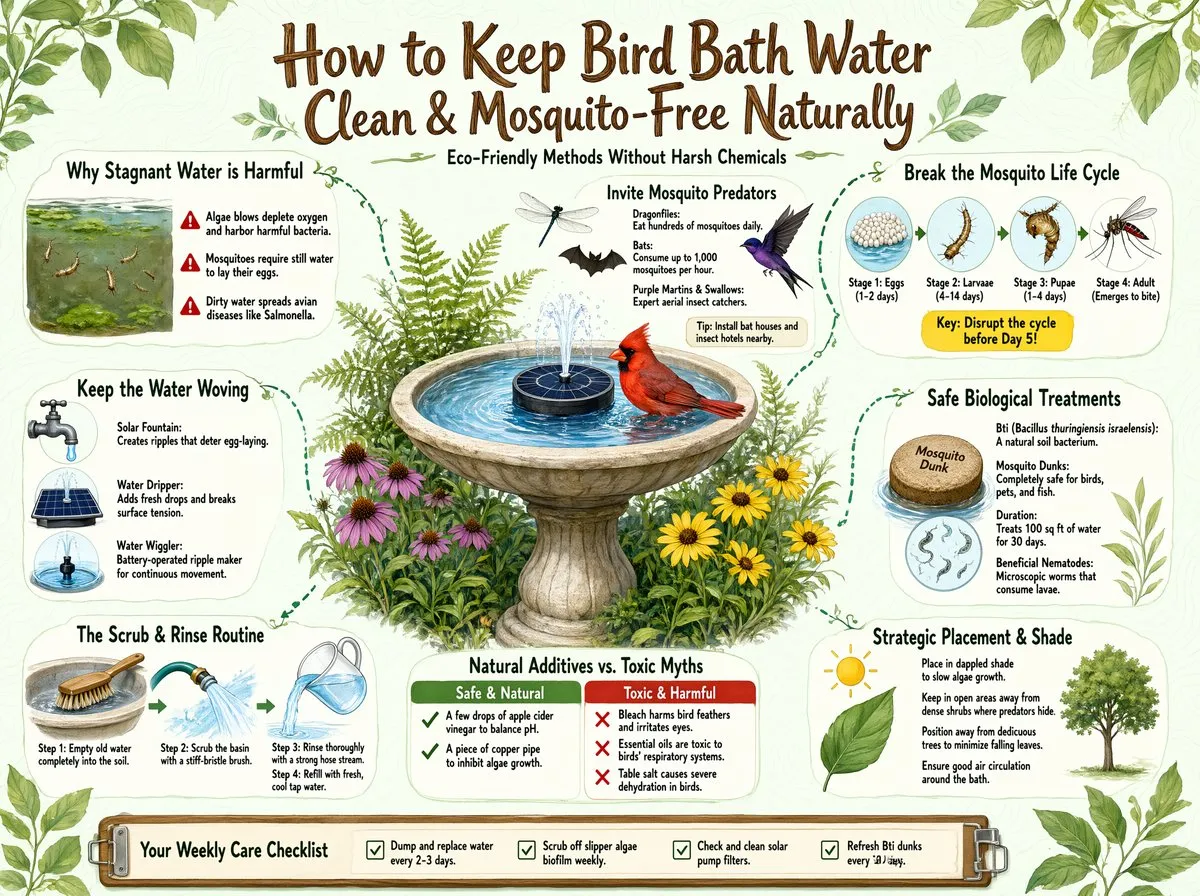
A bird bath is a cornerstone of any wildlife garden, but without proper maintenance, it can quickly become a hazard. Stagnant water breeds algae, spreads avian diseases, and serves as a prime breeding ground for mosquitoes. Fortunately, maintaining a pristine, safe watering hole does not require harsh synthetic algaecides or toxic chemicals.
Learning how to keep bird bath clean without chemicals relies on understanding the biology of both the wildlife you want to attract and the pests you want to deter. By utilizing mechanical agitation, biological controls, and simple household ingredients, you can create a healthy ecosystem in your backyard. For the full water picture, from basin choice to winter care, explore our bird baths and wildlife water guide.
1. Why Stagnant Bird Baths Threaten Garden Birds and Beneficial Insects
A neglected bird bath is more than just an eyesore; it is a biological hazard. When water sits still in warm weather, it becomes a vector for disease and a nursery for pests.
Avian Disease Transmission
Birds congregate in high densities at backyard baths, creating an environment where pathogens can spread rapidly. Fecal matter, saliva, and decaying feathers accumulate in stagnant water, fostering dangerous bacteria and parasites.
- Salmonellosis: This bacterial infection spreads quickly at crowded feeders and baths, causing lethargy and high mortality rates in species like pine siskins and house finches.
- Trichomonosis (Avian Canker): Caused by a protozoan parasite, this disease creates lesions in a bird’s throat, eventually preventing them from swallowing food or water. It is easily transmitted when infected birds drop contaminated saliva into the bath.
Toxic Cyanobacteria Buildup
Warm, stagnant, and nutrient-rich water (fueled by decaying leaves and bird droppings) is the perfect environment for cyanobacteria, commonly known as blue-green algae. Unlike standard green algae, which is primarily an aesthetic nuisance, certain strains of cyanobacteria produce hepatotoxins and neurotoxins. If birds or pets drink water heavily contaminated with toxic cyanobacteria, it can lead to fatal poisoning.
The Mosquito Breeding Cycle
Mosquitoes require still, stagnant water to complete their life cycle. A female mosquito lays her eggs in “rafts” that float on the surface tension of undisturbed water. Within days, these hatch into larvae (wigglers), which hang from the surface to breathe before pupating and emerging as biting adults. A single neglected bird bath can produce hundreds of mosquitoes a week, increasing the local population and the risk of vector-borne diseases like West Nile Virus.
2. The Essential Non-Chemical Cleaning Protocol: Vinegar, Baking Soda, and Elbow Grease
To maintain a healthy environment, you must physically remove biofilm, algae, and debris. Synthetic chemical cleaners leave toxic residues that can harm birds’ sensitive respiratory and digestive systems. Instead, rely on a strict mechanical and natural cleaning routine.
The Vinegar Dilution Method
White distilled vinegar is a highly effective, wildlife-safe acid that breaks down mineral deposits, hard water stains, and mild algae blooms.
- The Ratio: The standard clean bird bath with vinegar ratio recommended by ornithological organizations is one part white vinegar to nine parts water.
- Application: Empty the basin completely. Spray or pour the 1:9 solution over the entire surface. Let it sit for 10 to 15 minutes to loosen biofilm and debris.
Baking Soda for Stubborn Scrubbing
For heavy algae buildup or stubborn stains, create a paste using baking soda and a small amount of water. Baking soda is a mild abrasive that will scour the surface of the basin without scratching or degrading the material. It also acts as a natural deodorizer and helps neutralize acidic residues.
The Right Tools for the Job
Avoid wire brushes, which can leave behind microscopic metal splinters that can injure birds’ feet or beaks. Instead, invest in stiff non-wire scrub brushes with nylon or natural bristles. Use a specialized brush with a long handle for the main basin and a smaller, stiff-bristled detail brush to clean the crevices of textured concrete or resin. If you have not settled on a basin yet, our bird bath material comparison explains which surfaces are easiest to keep clean.
The Crucial Rinse
After scrubbing, rinse the basin thoroughly with a high-pressure hose for at least one to two minutes. Any remaining vinegar or baking soda will not harm the birds in trace amounts, but a clean rinse ensures the water tastes neutral, encouraging birds to drink and bathe. Allow the basin to dry completely in the sun before refilling; UV rays provide a natural secondary layer of sanitization.
3. Disrupting the Mosquito Life Cycle with Continuous Water Agitation
If you want to know how to prevent mosquito larvae in bird bath setups, the most effective biological hack is surface disruption. Mosquitoes physically cannot lay their eggs in moving water. The surface tension required to support their egg rafts is destroyed by ripples and agitation.
Solar-Powered Fountains and Aerators
Adding a small, floating solar fountain is an excellent way to keep water moving without running electrical cords across your yard. These devices use direct sunlight to power a small pump, creating a continuous bubbling or spraying action.
- Note on bird behavior: Moving water is highly attractive to birds. The sound of splashing or dripping water will draw in species that might otherwise ignore a static bath, such as warblers and thrushes, which do not typically visit seed feeders.
Mechanical Water Wigglers
If your bird bath is located in a heavily shaded area where solar panels are ineffective, a mechanical solar water wiggler bird bath alternative is a battery-operated water wiggler. These small, submersible devices feature a motorized arm that continuously taps the surface of the water, sending out concentric ripples. They run for weeks on a single set of D-cell batteries and are highly effective at deterring egg-laying mosquitoes.
Wildlife Drippers
A dripper attaches to your outdoor spigot or a suspended reservoir (like a repurposed gallon jug with a pinhole) and releases a slow, steady drip into the basin. The continuous “plink” of the water breaks the surface tension, prevents freezing in marginal winter weather, and provides an auditory cue that attracts birds from a distance.
4. Using Biological Controls Safely: The Science Behind Mosquito Dunks (Bti)
When water agitation is not possible, or if you are managing a larger, deeper water feature, biological controls offer a highly targeted, chemical-free solution. The gold standard for this is Bacillus thuringiensis israelensis, universally known as Bti.
What is Bti?
Bti is a naturally occurring soil bacterium. When processed into Bti biological mosquito dunks or granules, it acts as a highly specific stomach poison for the larvae of certain insects. When mosquito, fungus gnat, or black fly larvae ingest the Bti spores, the bacterium releases protein crystals that bind to specific receptors in their alkaline guts, causing the digestive tract to rupture. The larvae stop feeding and die within hours.
Are Mosquito Dunks Safe for Birds?
A common concern among gardeners is whether these products pose a risk to non-target wildlife. According to the Environmental Protection Agency (EPA) and extensive toxicological reviews, Bti is exceptionally safe.
- Avian Safety: Birds lack the specific alkaline gut receptors required for the Bti protein crystals to bind to. If a bird drinks water treated with Bti, or even eats a mosquito larvae that has ingested Bti, the bacterium simply passes through their digestive system harmlessly.
- Pollinator and Pet Safety: Bti does not harm adult butterflies, bees, dragonflies, or beneficial predatory insects. It is also completely non-toxic to mammals, meaning dogs, cats, and humans are entirely safe around Bti-treated water.
Application in Small Basins
A standard dunk is designed to treat 100 square feet of surface water for up to 30 days. For a standard, shallow bird bath, a whole dunk is overkill and may cloud the water. Break the dunk into quarters or use Bti granules, applying only a tiny pinch according to the manufacturer’s dilution guidelines for small volumes.
5. Strategic Basin Placement: Sun Exposure, Tree Debris, and Wind Considerations
Where you place your bird bath dictates how quickly it will foul. Balancing the needs of the birds with the realities of algae growth and debris accumulation requires strategic placement.
Managing Sun and Shade
Algae requires sunlight to photosynthesize and multiply. Placing a bird bath in full, blazing sun guarantees rapid green water. Conversely, placing it in deep, heavy shade slows algae growth but invites a different problem: tree debris.
- The Sweet Spot: Aim for dappled shade or a location that receives morning sun but is shaded during the hottest part of the afternoon. This keeps the water cooler (which birds prefer and which slows bacterial growth) while minimizing direct UV exposure for algae.
Avoiding the “Drop Zone”
Do not place your bird bath directly beneath bird feeders, dense deciduous trees, or berry-producing shrubs. Seed hulls, dropped suet, falling leaves, and bird droppings from roosting flocks will rapidly foul the water, providing a massive nutrient spike that fuels cyanobacteria and algae blooms. Keep the bath at least 10 to 15 feet away from heavy feeding stations.
Predator Ambush Points
While dense shrubbery provides a sense of security for birds waiting their turn to bathe, placing the bath inside or immediately adjacent to low, thick brush gives ground predators (like domestic and feral cats) a perfect hiding spot. Position the bath in the open, but ensure there is a clear flight path to a high, safe branch or fence line 10 to 15 feet away where birds can retreat to preen and dry off.
6. Dual-Purpose Basin Design: Creating Safe Zones for Both Birds and Butterflies
Standard bird baths are designed for songbirds, featuring sloping sides and depths of 2 to 3 inches. This depth is highly dangerous for delicate pollinators. Creating a butterfly puddling station bird bath requires modifying the basin to accommodate different anatomies.
The Drowning Hazard for Butterflies
Butterflies do not bathe; they drink. They use a long, straw-like proboscis to sip moisture. Because they are incredibly light, they rely on surface tension and dry perches to drink. If a butterfly lands in 2 inches of open water, its wings will break the surface tension, become waterlogged, and the insect will drown.
Building Internal Safe Zones
You can easily modify an existing bird bath to serve both birds and butterflies without altering the water level.
- River Stone Islands: Place several large, flat river stones in the center and edges of the bath. The tops of these stones should sit just above the water line, providing dry landing pads for butterflies to extend their proboscis into the shallow margins.
- Sloping Pebble Ramps: Create a gradual ramp of small, smooth pea gravel on one side of the bath. This allows tiny insects and ground-foraging beetles to access the water and crawl out safely if they slip.
- Mineral Supplements: Butterflies engage in “puddling” to extract sodium and amino acids from wet soil. You can place a small, shallow terra-cotta saucer filled with coarse, pesticide-free sand and a pinch of unrefined sea salt on one of the larger rock islands within the bath. The splashing from bathing birds will keep this sand perfectly moist for visiting swallowtails and sulfurs.
7. Natural Algae Deterrents: Copper Coins, Barley Straw, and Routine Water Swaps
Beyond cleaning and agitation, several natural additives and strict routines can inhibit algae growth without introducing synthetic chemicals into your garden ecosystem.
The Oligodynamic Effect of Copper
Copper possesses oligodynamic properties, meaning it is toxic to algae, bacteria, and fungi in very small doses. Dropping a few pieces of pure copper into the bird bath can slow algae growth.
- Verification Required: Modern pennies (minted after 1982 in the US) are primarily zinc with a thin copper plating, which is ineffective and potentially harmful if the zinc core is exposed and ingested. You must use pure copper discs, copper wire, or pre-1982 pennies. Ensure the copper is clean and uncoated.
Barley Straw Extract
Decomposing barley straw releases small amounts of hydrogen peroxide and other compounds that inhibit the cellular growth of algae. While commonly used in large koi ponds, concentrated barley straw extract is available in small dropper bottles. A single drop or two in a bird bath can help keep the water clear. (Note: Always verify the concentration and dosage instructions on commercial extract bottles to ensure it is scaled appropriately for a 2-gallon bird bath, as overdosing can alter the water’s pH.)
The 48-Hour Water Swap Rule
The single most effective, non-chemical algae and mosquito prevention tactic is physical removal. Mosquitoes take 7 to 10 days to develop from egg to adult. Algae requires days of undisturbed sunlight to colonize.
- The Routine: Dump the bird bath completely every 48 hours. Use the discarded water to hydrate your potted plants or ornamental shrubs. Give the basin a quick scrub with a stiff brush and a blast from the hose, then refill with fresh, cool water. This strict interval completely breaks the mosquito life cycle and prevents algae from ever establishing a foothold.
Frequently Asked Questions
To ensure your bird bath remains a safe, thriving hub for wildlife, here are the direct answers to the most common maintenance questions.
Is white vinegar safe to clean a concrete bird bath?
Yes, a diluted white vinegar solution (1 part vinegar to 9 parts water) is safe for occasional cleaning of concrete bird baths. It effectively removes hard water stains and algae without leaving toxic residues. However, because concrete is porous and slightly alkaline, avoid using undiluted vinegar or leaving the solution on the surface for extended periods, as the acid can slowly etch and degrade the concrete over time. Always rinse thoroughly.
Are Mosquito Dunks toxic to birds, bees, or butterflies?
No. Mosquito Dunks contain Bti (Bacillus thuringiensis israelensis), a naturally occurring soil bacterium that specifically targets the digestive systems of dipteran larvae (mosquitoes, fungus gnats, and black flies). The EPA and numerous wildlife organizations confirm that Bti is completely non-toxic to birds, bees, adult butterflies, pets, and humans. It is one of the safest biological controls available for backyard water features.
How often do I need to change bird bath water to prevent mosquito larvae?
To guarantee the prevention of mosquito larvae, you should completely empty, scrub, and refill your bird bath every 48 hours (every two days). The mosquito life cycle from egg to hatching larva to pupa takes a minimum of 7 to 10 days depending on the temperature. By flushing the water every two days, you physically dispose of any eggs or early-stage larvae before they can mature and emerge as flying adults.
Will adding a solar fountain scare away visiting songbirds?
No, the opposite is true. While sudden, loud noises or aggressive, high-pressure water jets might startle birds, the gentle splashing and rippling of a small solar fountain or water wiggler is highly attractive. Many insectivorous birds, such as warblers, vireos, and thrushes, rarely visit seed feeders but are drawn to yards specifically by the sound and visual cue of moving water.
Can butterflies drink from regular bird baths without drowning?
Not safely. Standard bird baths are too deep and lack dry landing zones. If a butterfly lands on open water, its delicate wings will break the surface tension, become waterlogged, and the insect will drown. To make a regular bird bath safe for butterflies, you must add large, flat river stones or floating corks that sit just above the water line, allowing the butterfly to land on a dry surface and reach the water with its proboscis.
Conclusion
Maintaining a clean, wildlife-safe water feature does not require a cabinet full of harsh chemicals. By understanding the biology of the creatures visiting your yard, you can implement highly effective, natural solutions. Utilizing a strict vinegar cleaning protocol, disrupting the water’s surface with solar aerators or mechanical wigglers, and employing targeted biological controls like Bti ensures your bird bath remains a sanctuary, not a hazard. Combine these methods with strategic placement and a rigorous 48-hour water swapping routine, and you will provide a pristine, mosquito-free hydration station for birds and butterflies all season long.