
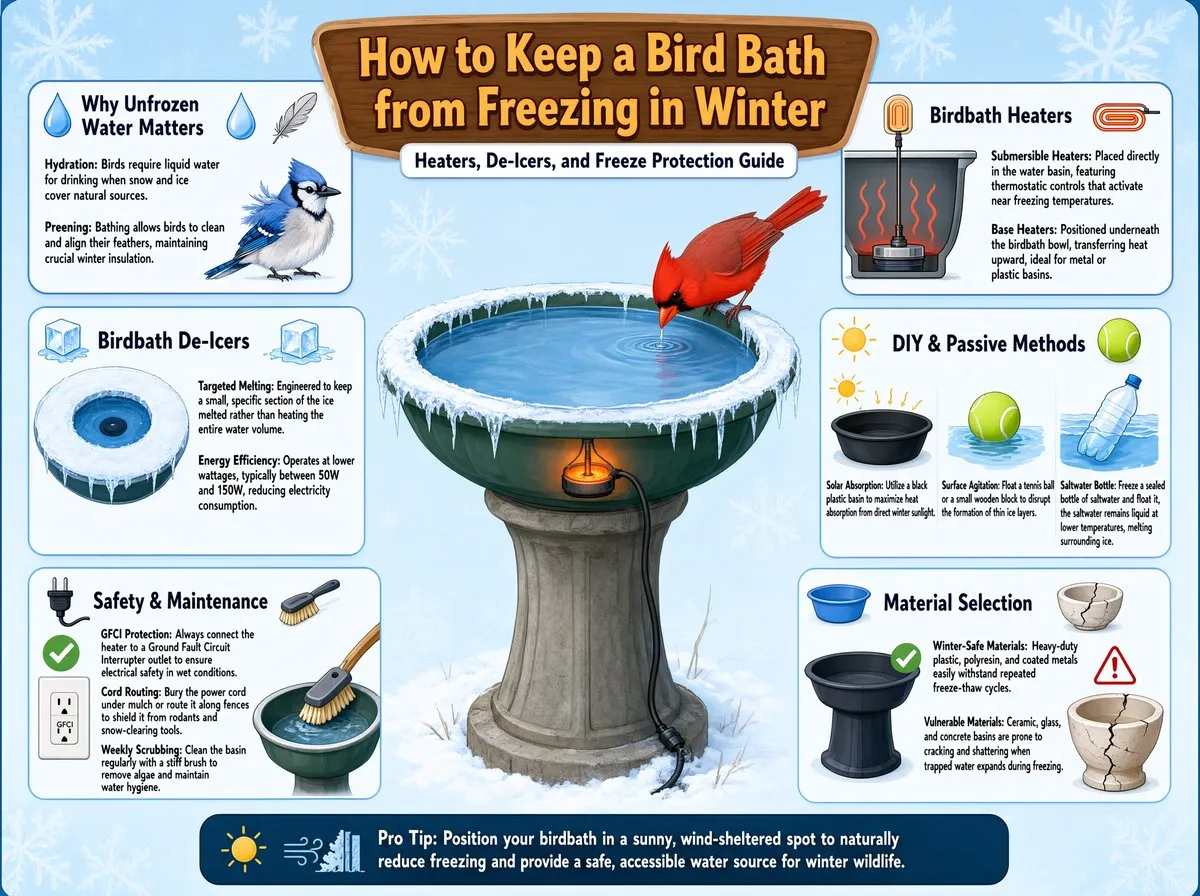
When temperatures plummet and snow covers the ground, backyard birds face a critical survival challenge: finding liquid water. While seeds and suet provide essential calories, water is equally vital for hydration and feather maintenance. Learning how to keep bird bath from freezing in winter is one of the most impactful ways you can support local wildlife during the harshest months of the year.
Providing a reliable, ice-free water source transforms your yard into a crucial winter sanctuary. For the full water setup across all seasons, explore our garden water features for wildlife guide. This guide covers the biology of winter avian hydration, electrical safety, hardware recommendations, and passive techniques to maintain open water safely and effectively.
1. Why Backyard Birds Need Fresh, Unfrozen Water in Freezing Temperatures
It is a common misconception that birds can simply eat snow to stay hydrated. While they will consume snow and ice, doing so comes at a severe metabolic cost. Birds maintain a high core body temperature, typically between 104°F and 108°F (40°C - 42°C). Melting frozen snow inside their bodies requires a massive expenditure of precious caloric energy—energy they desperately need to generate body heat and survive freezing nights. Providing liquid water saves them these vital calories.
Hydration and Metabolic Function
Just as in summer, birds require water for digestion and cellular function. Winter diets consisting heavily of dry seeds, nuts, and suet lack the moisture content found in summer insects and berries, making a dedicated water source even more necessary to prevent dehydration.
Feather Maintenance and Insulation
Water is essential for preening. A bird’s survival in freezing weather depends entirely on the insulating properties of its plumage. Feathers feature microscopic interlocking barbs that trap a layer of warm air close to the skin. Birds use their beaks to zip these barbs together and distribute oil from their uropygial (preen) gland. This oil waterproofs the feathers and keeps them flexible. Without access to liquid water to bathe and preen effectively, feathers become matted, brittle, and misaligned. Compromised feathers lose their insulating ability, leaving the bird vulnerable to rapid heat loss and fatal hypothermia. Understanding how to keep water thawed for birds is ultimately about protecting their physical armor against the cold.
2. Submersible De-Icers vs. Heated Bird Baths: Choosing the Right Solution
To maintain an open water source, you must introduce a heat source. The market offers two primary solutions: submersible de-icers and integrated heated bird baths. Choosing the right one depends on your existing equipment, budget, and aesthetic preferences.
Submersible Bird Bath De-Icers
A bird bath deicer is a standalone heating element designed to be dropped into your existing birdbath basin. These are ideal if you already own a durable, winter-safe birdbath (such as heavy-duty resin or metal) and simply need to prevent ice formation.
- Material Matters: When shopping for the best bird bath deicer, prioritize cast-aluminum models. Cast aluminum is highly durable, transfers heat efficiently, and will not degrade, crack, or leach chemicals like some plastic-coated alternatives might over time.
- Thermostatic Control: A crucial feature is a built-in bird bath heater thermostat. This internal sensor monitors the water temperature, turning the heating element on only when the water approaches freezing (usually around 35°F) and shutting it off once it reaches a safe liquid state (around 40°F). This prevents the unit from running continuously, saving energy and preventing the water from evaporating too quickly.
- Wattage: Look for low-wattage options (typically between 50W and 150W). The goal is not to heat the water to a balmy temperature, but merely to keep a small section of the surface ice-free.
Integrated Heated Bird Baths
A heated bird bath for winter is an all-in-one unit where the heating element is safely sealed within the basin itself.
- Convenience: These are excellent if your current birdbath is made of fragile materials like concrete or ceramic, which must be stored indoors during winter. You simply set the heated unit on your deck or a stand and plug it in.
- Safety and Design: Because the hardware is integrated, there are no exposed cords or heating coils in the water, which some birders prefer for safety and ease of cleaning. Most quality models also feature built-in thermostats and are constructed from durable, weather-resistant ABS plastic or resin.
3. Safe Electrical Setup: Extension Cords, GFCI Outlets, and Drip Loops
Running electricity outdoors in wet, freezing conditions requires strict adherence to safety protocols. Water and electricity are a dangerous combination, and winter weather accelerates the wear and tear on outdoor connections.
GFCI Protection is Mandatory
Never plug an outdoor heating element into a standard indoor outlet. Your outdoor receptacle must be equipped with a Ground Fault Circuit Interrupter (GFCI). A GFCI monitors the flow of electrical current; if it detects even a minor imbalance—indicating that electricity is escaping the circuit, potentially through water or a person—it cuts the power in a fraction of a second, preventing fatal shocks. (Note: Always verify that your outdoor outlets are GFCI compliant with local electrical codes; if you are unsure, hire a licensed electrician to install a weatherproof outdoor receptacle.)
Selecting the Right Extension Cord
If your outdoor outlet does not reach the birdbath, you must use an extension cord rated specifically for outdoor use (often marked with a “W” on the jacket).
- Wire Gauge (AWG): The thickness of the wire dictates how much current it can safely carry over a distance. For a 50-foot run powering a 150W de-icer, a 14-gauge cord is generally sufficient. For runs up to 100 feet, step up to a thicker 12-gauge cord to prevent voltage drop, which can cause the heater to underperform or overheat the cord.
- Cold-Weather Flexibility: Standard vinyl cords become rigid and brittle in freezing temperatures, making them prone to cracking and exposing live wires. Invest in heavy-duty, cold-weather extension cords made with specialized rubber or thermoplastic elastomer jackets that remain flexible well below freezing.
The Drip Loop and Waterproof Connections
When connecting the birdbath cord to the extension cord, you must create a “drip loop.” This involves letting the cord hang down in a U-shape below the connection point before routing it up to the outlet. If rain or melting snow runs down the cord, gravity will force the water to drip off the bottom of the loop rather than flowing directly into the electrical connection.
Furthermore, do not leave the connection exposed to the elements. Use an outdoor-rated, waterproof cord connection protector box. These heavy-duty plastic cases seal tightly around the plugged-in ends, shielding them from snow, ice, and standing water.
4. Passive and Non-Electric Methods to Delay Freezing
If running an extension cord across your yard is impossible or undesirable, you can employ passive strategies to prevent bird bath ice without electricity. While these methods will not keep water open during a deep, prolonged freeze, they can significantly delay ice formation during mild winter days and shoulder seasons.
Solar Absorption Techniques
Color plays a major role in heat retention. A white or pale concrete birdbath reflects sunlight, while a dark surface absorbs it.
- Dark Liners: Place a shallow, black plastic plant saucer or a heavy-duty black trash bag (secured tightly) inside the basin. The dark material will absorb solar radiation, warming the water above ambient air temperature.
- Solar-Absorbent Rocks: Place large, dark-colored river rocks inside the bath. They will absorb heat from the sun during the day and slowly radiate it back into the water as the evening temperatures drop. Ensure the rocks provide a rough, sloping exit route so birds can easily climb out if they slip into the water.
Strategic Windbreak Placement
Wind chill accelerates heat loss and promotes rapid freezing. Relocate your birdbath to a sheltered area of your yard, such as the leeward side of a dense evergreen shrub, a privacy fence, or the south-facing wall of your house. Blocking the biting winter wind reduces the rate of evaporation and heat loss, keeping the water liquid longer.
Floating Objects
Adding a floating object to the water’s surface can disrupt the formation of a solid ice sheet.
- Can I put a tennis ball or floating ball in a bird bath to stop ice? Yes, a floating ball works on the principle of surface agitation. As the wind moves the ball, it breaks the surface tension of the water, making it harder for a uniform layer of ice to form. While a tennis ball will not prevent a birdbath from freezing solid during a hard freeze (temperatures well below 25°F), it is a highly effective, zero-cost method for keeping a small hole open during light frosts and marginal freezing temperatures.
5. Protecting Bird Bath Materials from Thermal Shock and Cracking
Winter weather is notoriously destructive to garden decor. The primary culprit is the expansion of freezing water, but thermal shock is an equally dangerous, often overlooked hazard.
The Danger of Thermal Shock
Thermal shock occurs when a material experiences a rapid, extreme change in temperature. If you attempt to melt a frozen birdbath by pouring boiling or very hot water into a freezing cold basin, the sudden temperature differential causes the material to expand unevenly and violently. This will instantly shatter ceramic, terra cotta, glass, and many types of stone. Always use warm (not hot) tap water to thaw a basin, or rely on your de-icer to do the work gradually.
What Material Bird Bath is Best for Winter Weather?
Not all birdbaths are built to survive winter. The freezing and thawing cycle will destroy porous materials.
- Materials to Store Indoors: Concrete, terra cotta, ceramic, and cast stone are highly porous. They absorb water into their microscopic crevices. If you are choosing a basin and want to compare how each material handles frost, our bird bath material comparison weighs the trade-offs. When that trapped water freezes, it expands by up to 9%, creating immense internal pressure that causes the material to spall, flake, and ultimately crack in half. These materials should be drained, cleaned, and stored in a garage or shed for the winter.
- Materials Safe for Winter: Heavy-duty resin, fiberglass, ABS plastic, and powder-coated metals (like cast aluminum or copper) are non-porous and flexible enough to withstand temperature fluctuations without cracking. If you want a year-round fixture, investing in a high-quality resin or metal bath is the most reliable choice.
6. Harmful Winter Bird Bath Myths to Avoid (Salt, Glycerin, and Chemicals)
In the search for easy freeze-prevention, several dangerous myths circulate online. Adding chemical agents to lower the freezing point of water is highly hazardous to avian health.
The Dangers of Salt and Sugar
Adding salt to a birdbath will lower the freezing point of the water, but it is toxic to birds. Ingesting saltwater causes severe dehydration and electrolyte imbalances in small birds. Furthermore, the salt-laden water will spill over the edges, accumulating in your soil and killing surrounding plants and beneficial soil microbes. Sugar is equally harmful; it promotes rapid, dangerous bacterial and fungal growth in the water, which can cause fatal infections in birds.
Is it Safe to Add Glycerin or Anti-Freeze to a Winter Bird Bath?
Absolutely not. This is one of the most dangerous winter bird care myths.
- Chemical Antifreeze (Ethylene Glycol): Automotive antifreeze is highly toxic and lethal to birds, pets, and wildlife, even in minuscule quantities.
- Glycerin (Glycerol): While sometimes touted as a “natural” alcohol to keep water liquid, glycerin is a viscous, oily substance. If a bird bathes in glycerin-laced water, the substance coats their feathers. This destroys the microscopic structure of the plumage and strips away their natural waterproofing. A bird with glycerin-coated feathers loses its ability to trap insulating air and repel moisture, leading to rapid, fatal hypothermia the moment it steps out of the bath into the cold air.
The only safe way to keep a birdbath from freezing is through thermal heat (electric de-icers) or passive solar/wind protection. Never add foreign substances to the water.
7. Step-by-Step Winter Cleaning and Water Level Management
A winter birdbath requires a different maintenance routine than a summer one. Bacteria and algae can still grow in cool water, and debris from winter storms can quickly foul the basin.
Cold-Weather Sanitation Routine
- Empty and Scrub: Once a week, unplug the de-icer and empty the basin. Use a stiff-bristled brush to scrub the sides and bottom.
- Avoid Harsh Chemicals: Do not use bleach, dish soap, or chemical algaecides. These leave toxic residues that are difficult to rinse completely away in cold water and can harm the birds or damage the heating element’s casing.
- Use a Vinegar Solution: If there is stubborn algae or hard water scale, scrub the basin with a solution of one part white vinegar to nine parts water. Rinse thoroughly with clean water before refilling.
- Check the Hardware: Wipe down the heating element or de-icer cord to ensure no mineral buildup or debris is insulating the heater, which could cause it to overheat and fail.
This cold-weather routine follows the same chemical-free approach used year round. Our guide to keeping bird bath water clean covers the warm-season schedule and the safe vinegar dilution.
Managing Water Depth
Maintaining the correct water level is critical for both bird safety and hardware efficiency.
- Safe Depth: The water should be no deeper than 1 to 2 inches. Small birds, such as chickadees and finches, will avoid deep water, especially in winter when their heavy, wet feathers pose a massive flight risk. If your basin is deep, place several large, flat rocks in the center to create shallow islands and dry perching spots.
- Heater Efficiency: Submersible de-icers are designed to heat a specific volume of water. If the water level drops too low due to evaporation or splashing, the heating element may become exposed to the air. This can cause the unit to overheat, trip its internal safety shutoff, or melt its own casing. Check the water level every few days and top it off with warm water as needed.
Frequently Asked Questions
To summarize the most critical points of winter bird bath maintenance, here are the answers to the most common questions asked by backyard birders.
Will a bird bath heater or de-icer run up my electric bill? No, modern de-icers are highly energy-efficient. Because they utilize a bird bath heater thermostat, they do not run continuously. They only draw power when the temperature drops near freezing. A typical 50W to 150W de-icer operating on a thermostat during a cold winter month generally costs only pennies a day to run, making it a very economical way to support local wildlife.
Can I put a tennis ball or floating ball in a bird bath to stop ice? Yes, placing a floating object like a tennis ball in the water is a valid passive technique. The wind pushes the ball around, breaking the surface tension and disrupting the formation of a solid ice crust. However, this method only delays freezing; it will not keep the water open during a hard, sustained freeze.
Is it safe to add glycerin or anti-freeze to a winter bird bath? No, it is incredibly dangerous. Chemical antifreeze is highly toxic and fatal. Glycerin, while sometimes suggested in online forums, is an oily substance that coats bird feathers, destroying their natural waterproofing and insulation. A bird that bathes in glycerin-laced water will likely die of hypothermia. Never add anything but plain, clean water to your birdbath.
What material bird bath is best for winter weather? Non-porous, flexible materials are best. Heavy-duty resin, fiberglass, ABS plastic, and powder-coated metals (like cast aluminum) will easily survive freezing temperatures. Avoid leaving concrete, terra cotta, or ceramic birdbaths outside, as trapped moisture freezing inside the porous material will cause them to crack and shatter.
How do birds clean their feathers in winter without freezing? Birds maintain their feathers through preening, using their beaks to align feather barbs and spread protective oils from their uropygial gland. While they can eat snow for hydration, they require liquid water to bathe and effectively distribute these oils. Access to an open, unfrozen birdbath allows them to wash away dirt and parasites, ensuring their plumage remains perfectly aligned to trap body heat and repel winter moisture.
Conclusion
Learning how to keep bird bath from freezing in winter requires a combination of the right hardware, safe electrical practices, and an understanding of avian biology. By investing in a thermostatically controlled cast-aluminum bird bath deicer or an integrated heated bird bath for winter, you provide a vital lifeline to your local flock. Combine this with proper winter-safe materials, strict adherence to electrical safety, and a refusal to use harmful chemical additives, and your yard will become a thriving, active sanctuary even on the coldest, snowiest days of the year.