
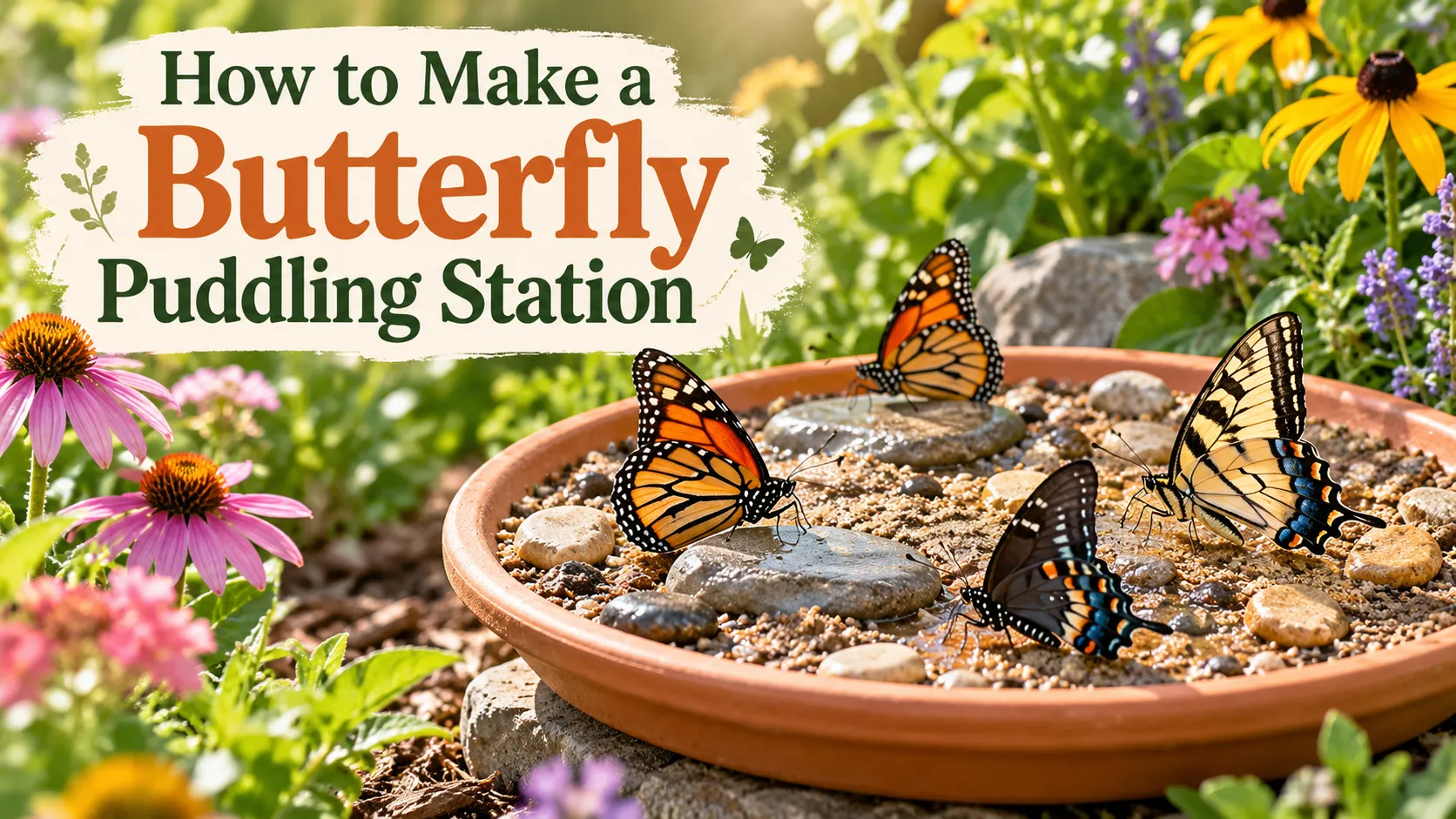
To make a butterfly puddling station, sometimes called a butterfly puddler, fill a shallow dish with a mix of sand and garden soil, set a few flat stones on top, and keep it damp but not flooded. Place it in a sunny, quiet spot close to flowers, but not inside a planted bed. Salt is optional. We found no tested amount for garden use, so the simplest version leaves it out.
Why butterflies puddle
Puddling is when butterflies gather on wet mud or sand and sip moisture from it. Research has found that sodium is a main trigger for the behavior, and that in some species, males that collect sodium can pass part of it to females during mating.
Most puddlers are young males. A Georgia DNR wildlife column estimates that about 95 percent of butterflies at these gatherings are males. Some are simply drinking, but dissolved minerals such as sodium are thought to be a major draw.
So a puddling station is mainly a source of minerals, with moisture as a side benefit. It adds to a butterfly garden but cannot replace the flowers and plants butterflies depend on. For the bigger picture, see our guide to planning a complete butterfly habitat.
Which butterflies visit puddling stations
Visitors depend on where you live. In the Southeast, Georgia DNR lists swallowtails, sulphurs and red spotted purples as the most common visitors, with eastern tailed blues, harvesters and American snouts also appearing. Muddy puddles can also draw monarchs, as the Xerces Society notes.
Not every butterfly will come. Research in Colorado found that species differ in where they puddle, and some prefer animal dung to mud. A quiet station does not mean you built it wrong.
What you need
- A shallow container. A plant saucer, a shallow tray or a shallow bird bath basin all work. If you use a plastic dish, Penn State Extension suggests drilling a few holes about an inch below the rim so excess water drains instead of overflowing.
- Sand. Georgia DNR suggests builder’s sand or play sand. Penn State Extension prefers builder’s sand, which it says provides salts that play sand lacks.
- Garden soil or compost. This turns the sand into a mud that butterflies can probe.
- A few flat stones. These give butterflies dry places to land and warm spots to bask.
- Clean water from a source you trust.
How to build a butterfly puddling station
- Set the container in place. Put it on the ground or sink it so the rim sits flush with the soil.
- Mix the fill. Combine sand with garden soil or compost. UC Master Gardeners suggest roughly half sand and half soil or compost. Fill the container close to the rim.
- Add the stones. Press a few flat stones into the surface so their tops stay above the wet mix.
- Moisten it. Add water slowly until the mix is damp throughout but has no deep pools. Butterflies tend to line up along wet edges rather than land in open water.
- Keep it damp. Add water whenever the surface starts to dry, especially in hot weather.
To build one in the ground instead, dig a shallow depression, line it with an impermeable liner, and fill it with equal parts sand and soil.
Salt and other add-ins: what to use and what to skip
Do you need salt, and how much?
Many guides tell you to add salt, but they disagree on whether it is needed. The Xerces Society and Penn State Extension describe stations made with only soil, sand and water. Georgia DNR suggests mixing a small amount of plain salt into the sand. None of these sources gives a measured amount, and we found no tested amount for garden puddlers.
More salt is not better. In a Colorado field study, a white butterfly, Pieris napi, visited weaker salt solutions more often and fed for less time as the salt got stronger. Its preferred strength matched ordinary mud, which was the lowest in sodium of the natural materials tested. In a study of Japanese swallowtails, some butterflies that sipped strong solutions excreted some of that sodium.
Damp soil already releases minerals into the water butterflies drink, according to UC Master Gardeners. If you still want to add salt, keep it to a very small amount of plain salt, mixed into the sand.
Keep salty water away from plants
The clearest documented risk from salt is to your plants. Georgia DNR advises against putting a puddler inside a garden bed, because heavy rain or watering can make it overflow and carry salt to nearby plants. Excess sodium in soil can damage soil structure, and some perennials and lawn grasses can die from it. If your station contains salt, do not empty it onto planted beds.
What this guide leaves out
- Sugar. Some recipes add sugar to the mud, but research points to sodium as the main reason butterflies puddle. Nectar flowers are a better way to offer sugar.
- Wood ash. Butterflies have been seen sipping from wet ash, but we found no guidance on using it safely in a garden station.
- Raw manure. Some species are drawn to dung, but this guide sticks to the garden soil or compost that Extension and Master Gardener guides recommend.
- Fruit. Fruit feeding is a separate project and is not part of a puddling station.
Where to put your puddling station
Choose a sunny, quiet spot close to flowering plants, away from heavy foot traffic. The Xerces Society also suggests a sunny place near spots insects already use for shelter.
Place it near, but not in, a flower bed, so any overflow drains away from plant roots. Nectar flowers close by give visiting butterflies food as well as minerals. In a large garden, you can set out more than one station.
Keeping it damp, clean and mosquito free
Keep the mix moist but avoid standing water, or drain off any water that collects. Penn State Extension and the Xerces Society both recommend emptying and refilling standing water every few days to stop mosquito larvae.
Scrub the container when you refresh it. Mosquito eggs stick to container walls until scrubbed off, and can become adults about a week after water covers them.
Clear out leaves and other debris, and remove algae if it builds up. Avoid mosquito sprays: they also harm beneficial insects, and changing the water works better.
Puddling station, bird bath or mister?
These three water features do different jobs.
- A bird bath holds open water for birds to drink and bathe in. Cornell Lab recommends water no deeper than 1 inch at the edges, sloping to no more than 2 inches in the middle. Butterflies tend to avoid landing on open water and sip from wet edges instead.
- A puddling station is a damp surface of sand and soil with no open water. Butterflies land on it and sip minerals from the mud. A shallow bird bath basin filled with sand can become one.
- A mister or dripper delivers water automatically. If you want gentle, timed moisture rather than a station you water by hand, see our guide to shallow misters for butterflies.
Common questions
When do butterflies use puddling stations?
In the warm months. Summer and fall are the best times to see puddling gatherings, though butterflies also puddle in spring. Timing varies by region and species.
Why are no butterflies visiting my station?
Give it time, and check that the mix stays damp and the spot gets sun. Visitors also depend on which butterflies live near you, and some species prefer other puddling sources, such as dung, over mud. A station works best alongside nectar flowers and the host plants caterpillars need.
Sources and further reading
- Resource Specialization in Puddling Lepidoptera (Environmental Entomology)
- K+ Excretion: The Other Purpose for Puddling Behavior in Japanese Papilio Butterflies (PLoS ONE)
- Creating a Puddling Station for Pollinators (Penn State Extension)
- If You're Thirsty, They're Thirsty: Make a Simple Water Source To Support Pollinators (Xerces Society)
- Out My Backdoor: Puddle Parties (Georgia DNR Wildlife Resources Division)
- Water for Wildlife (UC Master Gardener Program of Napa County)
- Winter Salt Injury and Salt Tolerant Landscape Plants (UW Madison Extension)
- Attract Birds With Birdbaths (All About Birds, Cornell Lab of Ornithology)
- Help Control Mosquitoes that Spread Dengue, Chikungunya, and Zika Viruses (CDC)