
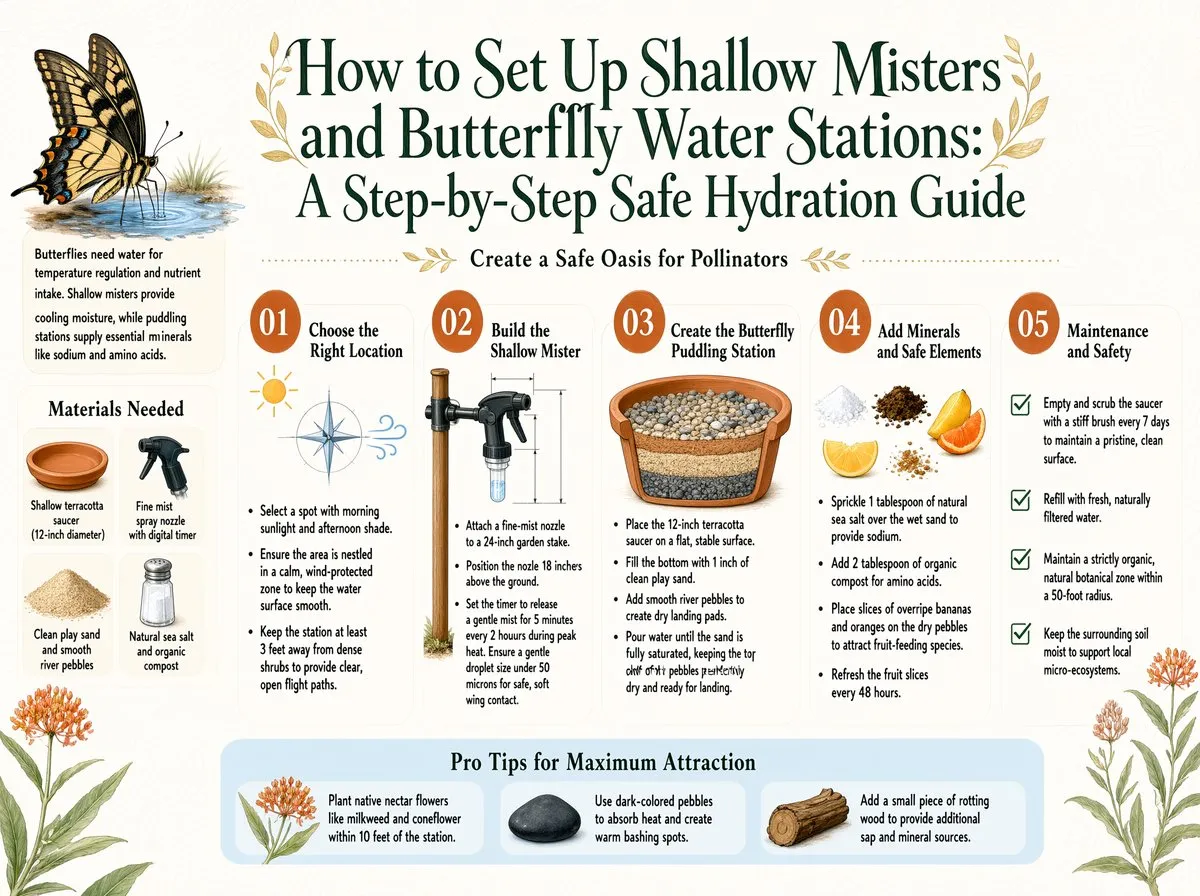
Butterflies are a vital and beautiful part of any pollinator garden, yet they face a unique survival challenge: staying hydrated. While birds easily splash in deep basins, butterflies require a specialized approach to access water safely. A proper butterfly water station setup mimics the damp margins of natural streams and wet soil, providing essential hydration and critical minerals without the risk of drowning.
If you have noticed butterflies clustering on wet pavement after a rainstorm, you have witnessed their natural drinking behavior. Replicating this environment in your garden requires specific techniques and hardware. This guide details how to build a safe water station for beneficial insects, combining a butterfly puddling station with micro misters for pollinators. For the full water setup, from open basins to year round care, explore our bird and butterfly hydration guide.
1. Why Butterflies Cannot Drink from Deep Bird Baths
A standard garden bird bath is a fatal hazard for butterflies. To understand why, you must look at the mechanics of how a butterfly drinks and the physical properties of water.
The Mechanics of the Proboscis
Butterflies drink using a proboscis, a long, tubular tongue that uncoils like a straw. They cannot submerge their heads or scoop water. Instead, they must land on a stable, dry surface and lower their proboscis into moisture. A deep bird bath offers no landing pad, forcing the butterfly to hover or struggle to reach the water.
Surface Tension and Wing Vulnerability
Water has high surface tension. When a butterfly’s delicate, powdery wings touch open water, the moisture instantly clings to the scales. This added weight prevents the insect from taking off. Even a minor splash or a slight loss of balance can result in the butterfly becoming trapped by the surface tension, leading to drowning. Furthermore, large water droplets from standard bird bath splashing can physically batter and damage fragile wings.
Why can’t butterflies drink from standard garden bird baths? The depth of the water and the lack of secure, dry footing make them inaccessible and deadly. A shallow butterfly bath setup eliminates these risks by providing a textured, stable substrate right at the water’s surface.
2. Essential Equipment: Selecting Misters, Shallow Basins, and Perches
Creating a dedicated butterfly watering zone requires specific hardware. The goal is to provide gentle moisture and secure landing zones.
Low-Pressure Micro-Misting Nozzles
What type of garden mister creates the right droplet size for butterflies? Standard hose sprayers and high-pressure misting systems produce heavy, aggressive droplets that can knock butterflies off their perches and damage their wings. You need micro misters for pollinators. These specialized nozzles emit a fine, gentle fog or micro-droplets that settle softly on leaves and substrate, mimicking morning dew. Look for a garden misting kit for butterflies that operates on standard hose pressure but restricts flow through tiny brass or ceramic orifices.
Shallow Basins
Select broad, shallow containers to hold your puddling substrate. Decorative shallow terra-cotta saucers (often sold as plant pot bases) are ideal because their porous nature helps regulate moisture. Large, flat ceramic dishes or specialized concrete butterfly puddlers also work well. The key is a low rim—no more than an inch or two high—allowing easy access from any angle.
Perching Materials
Butterflies need dry spots to land, bask, and drink. Smooth river pebbles, flat slate pieces, and textured river stones provide excellent perches. Avoid sharp gravel, which can tear delicate wings. You will also need small twigs or branches to place near the mister, giving butterflies a safe canopy to rest on while they drink from the wet leaves below.
3. Building a Mineral-Rich Butterfly Puddler Substrate
Water is only half of the equation. Butterflies, particularly males, actively seek out minerals through a behavior known as puddling.
What is Puddling?
Puddling is the act of gathering around wet mud or sand to extract dissolved nutrients. While nectar provides carbohydrates for energy, it lacks essential salts and amino acids. Male butterflies require sodium and specific minerals to successfully reproduce. They absorb these nutrients from the soil and pass them to females during mating, significantly increasing the viability of their eggs. A butterfly puddler sand recipe must therefore be more than just wet dirt; it must be a mineral supplement.
The Puddler Substrate Recipe
To build an effective substrate, combine the following ingredients:
- Coarse Builder’s Sand (60%): Provides excellent drainage and structure, preventing the mixture from turning into an impenetrable mud slick.
- Pesticide-Free Garden Loam or Compost (30%): Adds organic matter and naturally occurring trace minerals. Ensure any soil you use is completely free of systemic pesticides, fertilizers, or chemical treatments.
- Unrefined Sea Salt or Mineral Additives (10%): A small pinch of unrefined sea salt (not iodized table salt) provides the vital sodium butterflies crave. Alternatively, you can use organic mineral additives designed for livestock or specific pollinator salts available from gardening suppliers. (Note: Always verify the safety of commercial mineral additives to ensure they do not contain anti-caking agents or heavy metals harmful to insects.)
Mix these ingredients thoroughly before adding them to your shallow basin. The resulting mixture should feel gritty, hold slight moisture, and remain loosely packed.
4. Step-by-Step Micro-Mister Installation and Foliage Placement
Once you have your hardware, it is time to install the garden misting kit for butterflies. The placement of your misters dictates how effectively the water reaches your puddling station and surrounding plants.
Mounting the Mister Lines
Micro-misters can be mounted on specialized garden stakes driven into the soil, or clipped to overhanging branches and trellises. Stakes offer precise positioning directly over your puddler, while overhead mounting creates a broader canopy of moisture that benefits multiple plants. Position the mister heads 12 to 18 inches above the target area. This height allows the fine mist to disperse evenly without creating a concentrated, heavy stream.
Setting Automated Timers
Butterflies are most active during the warmest parts of the day, but the soil and substrates dry out quickly in the sun. Manually turning on a hose is impractical. Pair your misting kit with an automated hose timer. Set the timer for short, frequent intervals—for example, running the mist for 5 to 10 minutes every two hours during peak daylight. This maintains consistent dampness without waterlogging the substrate or wasting water.
Adjusting Droplet Size and Foliage Placement
Most quality micro-misters feature an adjustable head. Twist the nozzle to reduce the droplet size until it produces a soft fog rather than a harsh spray. Direct the mist toward broad-leafed host plants (like milkweed or passionvine) or dense shrubs near the puddler. Butterflies will land on the leaves, drink the collected dew, and then move down to the puddling station for minerals.
5. Assembling the Shallow Puddling Station
With your substrate mixed and misters primed, you can assemble the physical butterfly puddling station.
Step 1: Base Layering
Place your shallow terra-cotta saucer or ceramic dish in its final location. Add a base layer of larger, smooth river pebbles to the bottom of the dish. This layer aids in drainage and prevents the finer sand from packing too tightly at the bottom.
Step 2: Adding the Substrate
Fill the dish with your prepared mineral-rich sand and loam mixture, leaving about an inch of space below the rim. Press it down lightly, but do not pack it hard. The substrate needs to remain porous to absorb the micro-mist.
Step 3: Creating Dry Footholds
Arrange flat river stones or small pieces of slate on top of the sand, spacing them out so their tops sit slightly above the surface of the substrate. These stones act as islands. When the mister runs, the sand becomes wet, but the tops of the stones remain completely dry. This ensures that butterflies always have a safe, dry place to land and extend their proboscis into the damp sand below.
Step 4: Initial Watering and Maintenance
Water the station manually the first time to settle the substrate. Thereafter, rely on your automated micro-mister. The goal is a safe water station for beneficial insects where the sand is consistently damp, but never submerged in standing water. Maintain water levels just below the stone landing surfaces to guarantee dry footing at all times.
6. Strategic Garden Placement: Sun, Wind, and Nectar Proximity
The location of your butterfly water station setup is just as critical as its construction. Butterflies are cold-blooded and highly sensitive to environmental conditions.
Sun-Warmed Morning Perches
Butterflies need to raise their body temperature before they can fly and feed. Place your puddling station in an area that receives bright, direct morning sun. The large, flat river stones you included in the setup will absorb solar heat, providing ideal thermoregulation perches. However, provide some dappled afternoon shade to prevent the damp sand from drying out completely and baking in the peak heat.
Windbreaks and Shelter
A strong breeze will disperse your micro-mist before it reaches the substrate and make it difficult for butterflies to navigate. Tuck your water station near a windbreak, such as a dense hedge, a trellis covered in vines, or the leeward side of a garden shed. This shelter also provides a safe haven from aerial predators like dragonflies or birds.
Immediate Proximity to Nectar and Host Flowers
Efficiency is key for foraging insects. Position your watering zone within a few feet of your most prolific nectar flowers (like coneflowers, zinnias, and butterfly bush) and essential host plants. A butterfly expends significant energy flying; clustering water, minerals, and food sources creates a highly attractive, low-energy habitat corridor.
7. Hygiene, Algae Control, and Mosquito-Proofing Protocols
Standing water and damp soil in a garden inevitably attract pests and pathogens. Maintaining a safe water station for beneficial insects requires strict, chemical-free hygiene routines.
Preventing Mosquito Larvae
How do you prevent mosquito larvae in shallow butterfly puddlers? Mosquitoes require stagnant, standing water to lay their eggs. By designing your puddler as a damp sand bed rather than a deep pool, you eliminate their primary breeding ground. The substrate should be moist like a wrung-out sponge, not a puddle of surface water.
If heavy rain or mister runoff creates accidental standing water, flush the basin immediately. If standing water is unavoidable in your broader garden design, use Bacillus thuringiensis israelensis (Bti), commonly sold as mosquito dunks or bits. Bti is a naturally occurring soil bacterium that specifically targets the digestive systems of mosquito and fungus gnat larvae. It is widely recognized by conservation groups, including the Xerces Society, as safe for use around adult butterflies, bees, birds, and pets. (Note: Always verify the active ingredients on commercial pest control products to ensure no synthetic broad-spectrum insecticides are included.)
Algae and Fungal Control
Algae and fungal blooms thrive in damp, warm environments. If algae begins to coat your terra-cotta saucer or river stones, it can become slippery and hazardous to butterflies.
To control algae safely:
- Scrub Weekly: Empty the basin and scrub the stones and dish with a stiff brush and plain water.
- Avoid Chemical Cleaners: Never use bleach, soap, or chemical algaecides. Even trace residues can be fatal to delicate pollinators or contaminate the mineral substrate.
- Refresh the Substrate: If the sand develops a sour smell or heavy mold, discard it and mix a fresh batch.
- Promote Airflow: Ensure the station is not entirely boxed in by dense foliage, allowing slight air movement to dry the top layer of stones between misting cycles.
These habits carry over to any bird bath you keep nearby. For a full chemical-free schedule and the safe vinegar ratio, see our guide to keeping bird bath water clean.
Conclusion
A successful butterfly water station setup bridges the gap between simple observation and active conservation. By moving beyond standard bird baths and installing micro misters for pollinators and specialized butterfly puddling stations, you provide a critical lifeline. This setup delivers the precise hydration and minerals butterflies need to thrive, all while keeping them safe from surface tension hazards and predators. With the right shallow basins, mineral-rich substrates, and strategic garden placement, your watering zone will become a bustling, vibrant hub of winged activity all season long.