
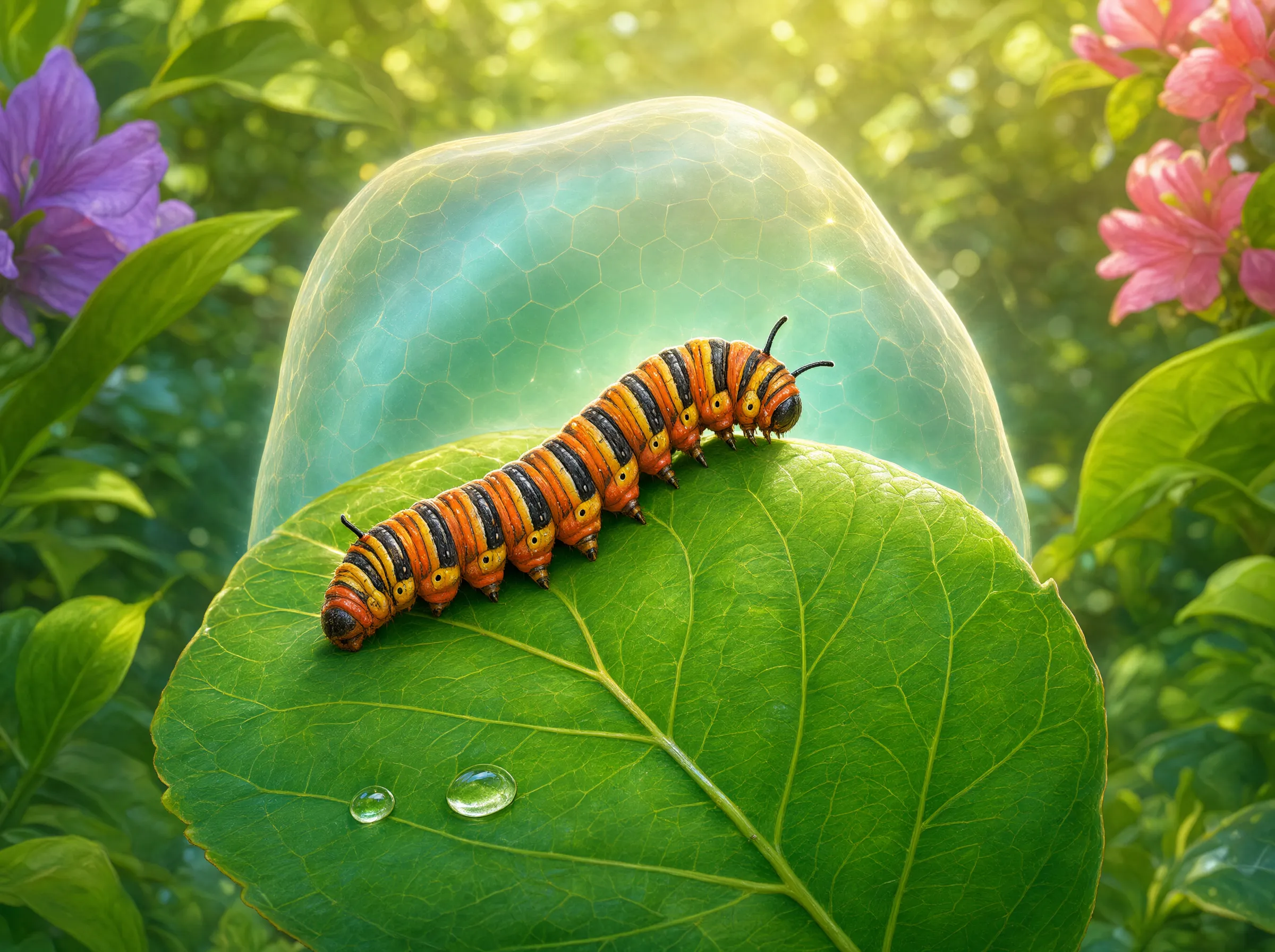
You planted the host plants. The eggs hatched. Then the caterpillars started disappearing one by one, or you found a caterpillar covered in strange white cocoons and had no idea what happened.
This is the most common frustration in butterfly gardening, and it is not your fault. In natural settings, the vast majority of caterpillars never reach adulthood. They are consumed by predators or killed from the inside by parasitoid insects.
You cannot eliminate this mortality without disrupting the food web your garden is trying to support. But you can tilt the odds in favor of your caterpillars using physical barriers, smart planting, and careful rearing practices, all without reaching for a spray bottle.
Predators vs. Parasitoids: What Is Actually Killing Your Caterpillars
Most gardeners lump all caterpillar loss under the umbrella of predators. In reality, the two biggest threats operate in completely different ways, and telling them apart changes what you can do about it.
Predators Kill Immediately
Predators consume the caterpillar outright, often leaving nothing behind but a chewed leaf and a missing larva. Common caterpillar predators in North American gardens include:
- Birds. Chickadees, wrens, titmice, and orioles hunt caterpillars relentlessly during nesting season. A single brood of Carolina chickadees requires thousands of caterpillars to fledge.
- Spiders. Orb weavers, crab spiders, and jumping spiders ambush caterpillars on leaves and stems.
- Predatory insects. Assassin bugs, wheel bugs, praying mantises, and predatory stink bugs pierce caterpillars with their mouthparts and drain them.
- Lizards and frogs. Small anoles and tree frogs pick caterpillars off foliage, especially in warm, humid gardens.
- Ants. While some ant species have mutualistic relationships with certain butterfly larvae, many ants attack small caterpillars, especially when the ants are tending aphid colonies on the same plant.
When a predator takes a caterpillar, the loss is fast and usually invisible. You simply notice fewer larvae on the plant the next day.
Parasitoids Kill Slowly from the Inside
Parasitoids are the stealthier and, in many gardens, the more significant threat. A parasitoid does not eat the caterpillar. It uses the caterpillar as a living nursery for its own young.
Parasitic wasps in the families Braconidae and Ichneumonidae are the most common parasitoids. A female wasp lands on the caterpillar and injects eggs through its skin using a needle like ovipositor. The caterpillar continues to eat and grow normally for days or weeks while the wasp larvae develop inside its body.
Eventually, the caterpillar stops feeding, wanders to a leaf or stem, and anchors itself. Dozens of tiny, white, rice grain shaped cocoons erupt from its body. The wasp larvae have consumed the caterpillar from the inside and are now pupating. The caterpillar is dead.
Tachinid flies use a different delivery method. Some species lay eggs directly on the caterpillar’s cuticle. Others deposit eggs on the leaves the caterpillar eats, and the larvae burrow through the gut wall after ingestion. The result is the same: the caterpillar is consumed internally and dies before pupating.
The critical thing to understand is that by the time you see visible signs of parasitism, the caterpillar is already lost. No intervention at that stage will save the butterfly inside it.
The Food Web Reality
Before implementing protection strategies, it helps to reframe what success looks like in a butterfly garden. Caterpillars are not just future butterflies. They are a foundational food source for the rest of your garden’s wildlife.
When a warbler strips caterpillars from your oak tree, that is the system working as intended. Supporting the full butterfly habitat lifecycle means accepting that your garden feeds many species, not just the ones you are watching for.
The goal of protecting caterpillars is not zero mortality. Achieving zero mortality would require eliminating birds, spiders, and wasps from your yard, which would collapse the very ecosystem you are building. The goal is to ensure that enough caterpillars survive to sustain the local butterfly population while the rest fulfill their role in the food web.
Chemical Free Protection Strategies
The following methods are practical, evidence based, and safe for the rest of your garden’s wildlife.
Grow More Host Plants Than You Think You Need
The single most reliable protection strategy is abundance. If you have three milkweed plants and ten caterpillars, a single tachinid fly or a foraging chickadee can wipe out your entire cohort. If you have thirty milkweed plants spread across the garden, the same predators and parasitoids will take their share, and plenty of caterpillars will still reach pupation.
Effective caterpillar protection in the garden relies on spatial separation. Planting milkweed varieties for monarchs across different garden beds makes it harder for parasitoids to find every larva. A dense, diverse host plant patch acts as a buffer against total loss.
The same principle applies to any host plant. More parsley means more black swallowtail survivors. More passionvine means more Gulf fritillaries. Plant generously and accept that some foliage will be stripped and some larvae will be taken.
Use Physical Barriers Before Parasitoids Arrive
Physical barriers are the only reliable way to exclude parasitoid wasps and tachinid flies from your caterpillars outdoors. The key constraint is timing: barriers must be in place before the parasitoids find the caterpillars.
Organza bags are the simplest option for small branches or individual leaf clusters. Slip a sheer organza gift bag over the section of plant where caterpillars are feeding and cinch it closed around the stem. The mesh is fine enough to block parasitic wasps and flies while allowing sunlight, rain, and airflow to reach the leaves.
Fine insect mesh or tulle works for larger plants or shrubs. Drape the mesh over the entire plant and secure it tightly at the base with clips or stakes so that crawling predators like ants and spiders cannot enter from below.
Check under barriers every few days to make sure caterpillars have not run out of food. If you applied the barrier after the caterpillars were already parasitized, the wasps or flies will still emerge inside the bag.
Raise Vulnerable Caterpillars in Enclosures
For high value species or when you are seeing heavy parasitism outdoors, moving caterpillars into a controlled environment is the most effective protection available.
Mesh rearing cages placed over potted host plants or cut stems in water keep all predators and parasitoids out. Indoor rearing in a spare room or screened porch offers total protection from outdoor threats.
The trade off is hygiene. Enclosed caterpillars produce frass rapidly, and warm, humid cages are ideal environments for fatal pathogens like nuclear polyhedrosis virus and bacterial infections. Clean the enclosure daily. Remove all frass, old leaves, and dead larvae. Provide fresh host plant foliage every day. A disease outbreak in a crowded cage can kill an entire batch faster than any predator would have.
Manage Ants on Host Plants
If you notice heavy ant traffic on your host plants, the ants may be farming aphids and will aggressively defend their territory from caterpillars. You can deter ants by applying a sticky barrier band around the base of the plant stem, or by placing potted host plants in shallow water trays that ants cannot cross.
Do not use ant baits or insecticidal sprays near host plants, as these can harm caterpillars directly or contaminate the foliage they eat.
What NOT to Do: Sprays That Kill the Caterpillars You Are Trying to Save
This is the most important section in this article, because well meaning gardeners frequently destroy their own caterpillar populations with products they believe are safe.
Do not use Bacillus thuringiensis var. kurstaki (Btk) on or near host plants. Btk is a biological insecticide that specifically targets caterpillars. It is the active ingredient in many products marketed for cabbage worm and tent caterpillar control. When a butterfly larva eats a leaf treated with Btk, the toxin ruptures its gut lining and the caterpillar dies within days. Btk does not distinguish between pest caterpillars and the monarch, swallowtail, or fritillary larvae you are trying to protect.
Do not use spinosad on host plants. Spinosad is derived from soil bacteria and is often labeled as organic, but it is highly toxic to caterpillars on contact and through ingestion.
Do not use neem oil on host plants. Neem oil contains azadirachtin, which disrupts insect molting and feeding. It can kill small caterpillars and deform larger ones.
Do not use pyrethrin or pyrethroid sprays on host plants. These broad spectrum insecticides kill virtually all insects on contact, including caterpillars, pollinators, and beneficial predators.
The word organic on a pesticide label does not mean the product is safe for caterpillars. Before applying any spray in your garden, check whether your host plants are in the drift zone. Even a product applied to a nearby rose bush can drift onto milkweed or parsley on a windy day and kill the larvae feeding there.
Protecting Caterpillars Is a Numbers Game
Caterpillar protection in the garden is not about saving every individual larva. It is about creating conditions where enough caterpillars survive to maintain a healthy local butterfly population while the rest support the birds, spiders, and wasps that share your yard.
Plant more host plants than you think you need. Cover high value larvae with mesh barriers early. Raise your most vulnerable species in clean enclosures. And never spray anything on or near the plants your caterpillars depend on.
If a few butterflies emerge from your garden each season, your protection efforts are working, even if you never see what happened to the rest of the caterpillars.
Sources
- Xerces Society for Invertebrate Conservation. Pollinator pesticide safety, and the comparative overview of organic pesticides, including Bacillus thuringiensis and spinosad effects on caterpillars.
- Penn State Extension. Pollinator myths and reducing pesticide risk to caterpillars and other pollinators.
- Monarch Joint Venture. Monarch biology, natural enemies, and rearing guidance.