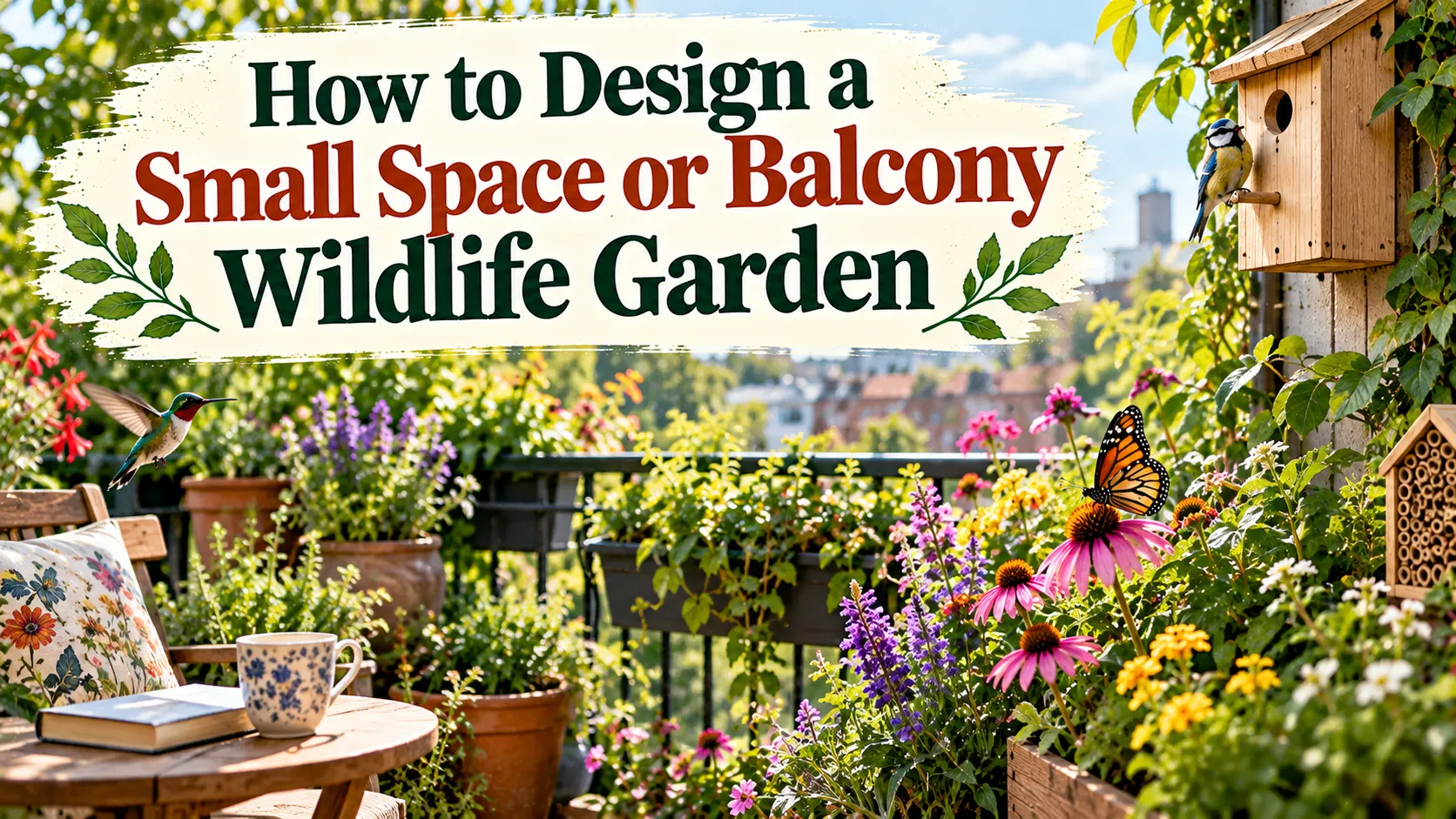
Wildlife habitat does not require a large yard. The National Wildlife Federation confirms that essential habitat can be provided in container gardens on balconies, decks and courtyards. A thoughtfully planted collection of pots is real conservation work, not a consolation prize for renters or city gardeners. For the wider framework behind these choices, see our guide to garden design for wildlife.
Why small spaces count
The choice of plants determines how much impact a small garden can have. Keystone native plants (the species most deeply embedded in local food webs) support up to 90% of butterfly and moth populations and up to 60% of native bees, according to Garden for Wildlife, citing Homegrown National Park research. A few containers planted with keystone species can connect your balcony to the wider landscape far beyond what their footprint suggests.
Wildlife will find container plants, though it may take time. NWF notes that a balcony set back from the street, or higher than nearby ground level blooms, may take a season to be discovered. Once pollinators and birds find your garden, they tend to return.
Assess your light before anything else
Before choosing containers or plants, observe your outdoor space on a few clear days to count how many hours of direct sun it receives. NWF defines the three basic categories:
- Full sun: more than six hours of direct sunlight per day
- Part sun / part shade: three to six hours
- Shade: fewer than three hours
Even a shady balcony can host a wildlife garden. Native ferns, shade tolerant asters and creeping phlox suit low light spaces. Your light level constrains every other decision, so measure it first and let it guide your plant selection.
Containers: size, material and depth
Native plants often have deeper root systems than the non native plants typically sold in garden centers. NWF recommends large, deep containers as a baseline: they accommodate deeper roots, hold soil heat more reliably through winter, and retain moisture better than shallow pots. Garden for Wildlife suggests aiming for around 18 inches of depth for most native species; plants with long taproots, such as butterfly weed (Asclepias tuberosa), do best at 18 to 24 inches or deeper.
Pot material affects how your garden behaves day to day. NWF explains that porous materials like ceramic and terracotta allow water to evaporate quickly, which is helpful in wet climates where mold is a concern, but demanding of more frequent watering in hot or dry conditions. Recycled plastic or metal containers retain moisture better and weigh less, an important factor for hanging planters or railings with load limits.
NWF recommends using several containers of varied sizes, heights and positions rather than one or two large pots. More containers mean more plants, more diversity and more visual structure. Different heights add layers that benefit insects moving through the garden.
Plants: nectar, host plants and bloom time
Plants are the foundation. An effective container planting for wildlife needs three things:
- Nectar and pollen plants for adult butterflies, bees and hummingbirds
- At least one larval host plant so caterpillars can complete their life cycle
- A spread of bloom times so something is always flowering through the season
Matching flowers to pollinators
UGA Extension’s container pollinator guide notes that bees are drawn to white, yellow and blue flowers, while butterflies favor red and purple and prefer flat, open landing platforms, such as coneflowers (Echinacea spp.) and small sunflowers. Including a range of flower colors and shapes across your pots supports a wider variety of pollinators. For a season by season nectar list, see our guide to season by season nectar flowers.
Native plants that work well in containers
NWF’s container plant list covers several genera suited to pots across much of the United States. Before purchasing, use NWF’s Native Plant Finder to confirm which species are native to your specific region. Native status always depends on location.
| Plant | Notes |
|---|---|
| Swamp milkweed (Asclepias incarnata) | Monarch caterpillar host plant; shallower roots than many milkweeds |
| Whorled milkweed (Asclepias verticillata) | Compact; monarch host plant |
| Butterfly weed (Asclepias tuberosa) | Monarch host plant; needs a deep container |
| Black eyed Susan (Rudbeckia hirta) | Mid to late summer blooms |
| Purple coneflower (Echinacea purpurea) | Pollinators use the blooms; birds eat the seedheads |
| New England aster (Symphyotrichum novae-angliae) | Late season nectar when most other plants have finished |
| Lanceleaf coreopsis (Coreopsis lanceolata) | Early summer blooms |
| Cardinal flower (Lobelia cardinalis) | Tall red tubes attractive to hummingbirds |
| Wild bergamot (Monarda fistulosa) | Bees, butterflies and hummingbirds; adds height |
| Little bluestem (Schizachyrium scoparium) | Host plant for some skipper butterfly species; winter texture |
| Creeping phlox (Phlox stolonifera) | Tolerates part shade; cascades over pot edges |
Some of these plants spread or grow taller than two feet over time and may eventually crowd out neighbors. Garden for Wildlife notes that at that point you can divide them or give them their own pot.
Larval host plants
Including a host plant lets caterpillars complete their entire lifecycle in your garden rather than only passing through. UGA Extension notes that parsley (Petroselinum crispum), dill (Anethum graveolens) and fennel (Foeniculum vulgare) host black swallowtail caterpillars and grow well in containers. Violets (Viola spp.) host several fritillary species and suit a cool season pot. Little bluestem and other native grasses may support skipper species and can hold a chrysalis through pupation.
Adding water
Every wildlife garden needs at least one water source. A shallow dish, saucer or small tray set at a stable height works for butterflies, small birds and other insects, and takes up almost no space. Change the water every two or three days to prevent mosquito breeding. A small recirculating fountain adds the sound and movement that birds find easier to locate than standing water. On exposed balconies, position water sources where they are sheltered from high winds and accessible for regular cleaning. For a butterfly specific setup, see our guide to shallow misters and butterfly watering stations.
Birds, feeders and window safety
A feeder extends the habitat value of your balcony garden, attracting species that rely on seeds, suet or nectar rather than flowers. A window feeder mounted directly to the glass, or a compact hanging feeder, suits most balcony spaces. For feeder styles that suit small spaces, see our guide to feeders for specific bird species.
Keep feeders and water sources clean. If your state or region has a current avian disease advisory, check your state wildlife agency’s website and follow their guidance on whether to pause feeding before setting anything out.
Using vertical space
Container gardening is not confined to floor level. NWF encourages combining many planters at varied sizes, heights and positions. Window boxes, hanging baskets and railing planters move plants off the ground and use the full volume of even a narrow outdoor space. Most pollinators and birds can easily reach elevated planters.
Taller plants such as blazing star (Liatris spicata) and wild bergamot add structure. Trailing plants like creeping phlox soften edges and give insects another surface to work through. UGA Extension suggests varying heights and flower forms in a single large pot or across a grouped arrangement: a tall centerpiece plant, a medium height bloomer alongside it and a trailing plant over the rim creates layering in a small footprint.
Overwintering perennial plants
Native perennials can come back for many seasons, saving money and reducing waste. The challenge is that container soil does not insulate roots as well as the ground. NWF advises selecting plants rated for at least two USDA hardiness zones colder than your own. Find your zone on the USDA Plant Hardiness Zone Map, then subtract two to find the minimum cold hardiness rating you need.
Additional steps that help: move containers close to the building wall in winter to benefit from retained heat; mulch the pot’s soil surface with fallen leaves to insulate roots and hold moisture; water very sparingly through the dormant season so the soil does not dry out completely.
Quick start checklist
- Count direct sun hours over two or three clear days before buying anything
- Choose containers that are large and deep, appropriate for your plants’ root depth
- Select native plants matched to your light level and hardiness zone
- Include at least one larval host plant alongside your nectar plants
- Vary bloom times so something is always in flower through the season
- Add a shallow water source and plan to refresh it every two to three days
- If adding a feeder, place it within three feet of the glass or treat nearby windows first
- Check your state wildlife agency’s site for any current disease advisories
Will pollinators actually find a balcony container garden?
Yes, though it can take a season. Pollinators forage widely and do visit nectar plants on upper floors. NWF notes that a balcony tucked away or higher than nearby ground level blooms may be less visible at first. Once wildlife discovers your garden, it tends to return consistently.
How many pots do I need to get started?
Two or three pots are enough to begin. One pot of a native nectar plant suited to your light, one larval host plant and a shallow water dish provide the essentials. Add more containers as space and budget allow. More variety in plants and bloom times supports a wider range of species.
Can a container garden qualify as a Certified Wildlife Habitat?
Yes. NWF's Certified Wildlife Habitat program accepts container gardens that provide the required habitat essentials: food (native plants can count as multiple food sources through their nectar, pollen and seeds), water, cover and places to raise young. A feeder, a shallow water dish and a larval host plant can help fulfill the requirements alongside your container plantings.